
ducks4you
Garden Master
- Joined
- Sep 4, 2009
- Messages
- 13,247
- Reaction score
- 20,195
- Points
- 437



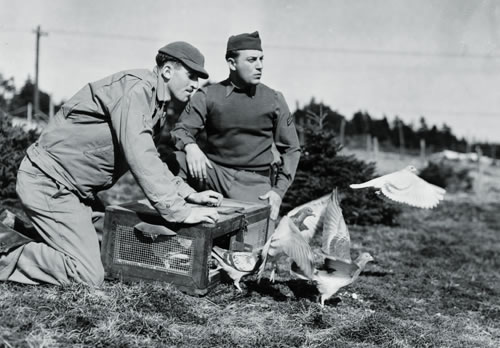 The company of Nepali Gurkhas and the British troops with them were trapped on Hangman’s Hill. They had fought their way onto the huge outcropping on Monte Cassino, southeast of Rome, during the fierce battle there in early 1944, only to be pinned down by withering German fire. Stuck for nine days, they had no means of communication with their lines below. American bombers dropped food and water to them, but much of it fell into German hands. Finally, three British volunteers set out toward the trapped men by three different routes. Each carried a haversack with an American homing pigeon inside. One man got pinned down by machine gun spray, but the other two penetrated German lines and reached their destination. All three men scribbled short messages about the routes they had taken and sent them off to headquarters by pigeon. That night, Allied guns opened fire to clear an escape route along the safe paths the scouts had identified, and the trapped soldiers slipped away to safety. The pigeons, meanwhile, rested safely in their loft.
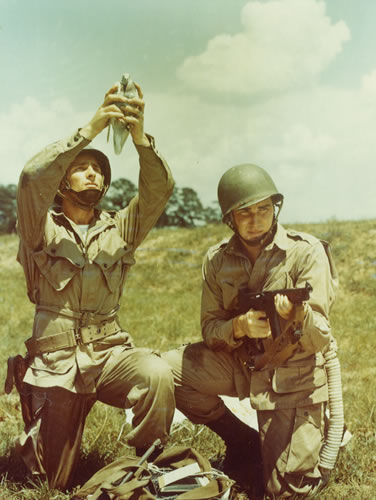 Communications improved considerably between World Wars I and II, but pigeons were still used throughout World War II as supplemental and emergency means of communication. Their duties varied depending on the branch of service. But wherever the army, navy, coast guard, or marines went, pigeons likely went, too—some bearing colorful names such as Lady Astor, Pepperhead, or Holy Ghost, and others known only by a number. Taken across enemy lines by patrols in pursuit of valuable information, they returned with news on the location and strength of enemy troops, gun positions, pending attacks, traffic conditions, and other vital data. Pigeons were the only means of communication for some advanced observation posts where terrain or proximity to enemy lines made it impossible to string wire or use a radio. Carried in baskets, in a sling under the arm, or in a patrol member’s shirtfront, the birds were released under fire, and most succeeded in getting through.
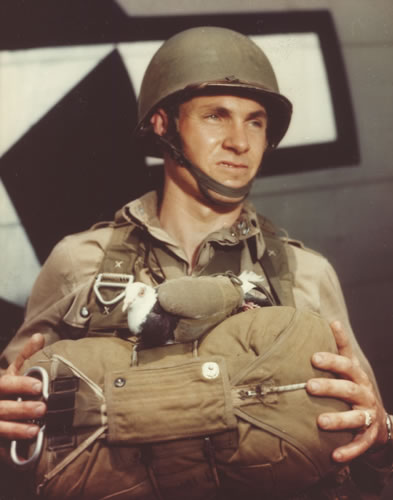 By February 1941, incoming GIs could report any experience they had handling pigeons and possibly get an assignment in that field. Meanwhile, the military conducted a census of racing pigeon lofts and asked owners to register their lofts for possible military use. Congress debated a law prohibiting hunters from shooting pigeons. On January 9, 1942, the Signal Corps issued a call to civilian pigeon fanciers for young, healthy birds of both genders. The army offered to purchase birds for five dollars each—half the average market price—but hoped to receive them as gifts or on loan. The American Racing Pigeon Union and the International Federation of American Homing Pigeon Fanciers lent their aid to the drive.
 ). Here's a visual of how they did this experiment: LINK.
IF people DID raise them for food there would be More of them. I wonder if they interbreed sometimes with wild pigeons?I had pigeons as a kid then again a couple of years ago. King pigeons are 3x size of regular pigeon they are bred for table, not sure why more people don't raise them for food. As a kid my father remembers his older brother having a flock of white racing birds, any bird that was slow was Sunday dinner.


