Digit, you might have noticed I don't use Wikipedia's pronunciation guide. There is international, mine is neanderthal, lol!
Will-AM-ette shows the accented syllable pronounced just like the word am, the ette is close enough to normal uses such as Juliette, Will is just like the name. It doesn't show the ette like the almost (u)tte where the umlaut needs to be put, but then, who has an umlaut on their keyboard? That's for the computer whizes. The neanderthal pronunciation guide will get things close enough, lol!!!!!!!!!!!!!
The bigfoots hardly ever talk, and they don't care how things get said. Heck, they change words at random, so any pronunciation guide that comes from them, well, don't you believe it. Trust the neanderthal pronunciation guide. It might not be quite perfect, but it'll get you there.
As for the french speaking neanderthals... ...walll... They have different keyboards that have things like a c with a funny hairdo. Any pronunciation guide that uses a c with a funny hairdo is most definitely suspect.
Course, some pronunciation guides have an o with yet another funny hairdo, and those who use that one say that the upside down e is no umlaut. SNOBS!
Nope, the best pronunciation guide is the good ole neanderthal one. Wish I could convince the big cheeses at Wikipedia of that...
My theory is that they want to combine it with all languages and make it universal.
How does that work with Myanmarese? I think they use another version, but there are some languages that just look like someone is drawing 200 different kinds of snakes even when they are writing about particle physics, so go figure. I just don't believe in the gravity constant. I think that is more of one stable state and that it can merge with the electroweak under exotic conditions yielding different reach and different pull but retaining the same energy total...
How'd I start talking about that? Oh yea, I should not post things after my second cup of coffee...






 .]
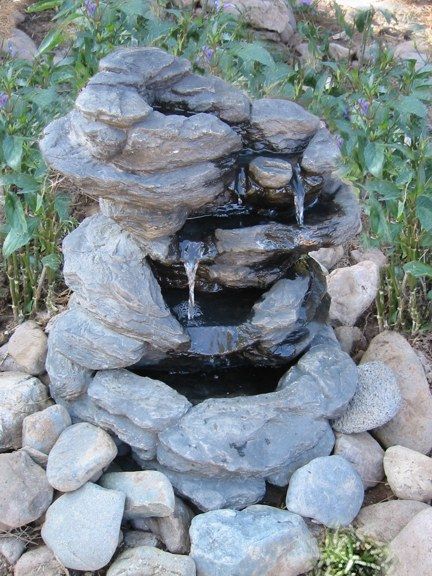
.] . Anyway, I can think of nothing better as a focal point for an outdoor room - maybe a little goldfish pond nearby in the future
  .
.


