answer questions please:

what have you tried? what varieties? how many? how were they grown? soil and fertilizers used? regular irrigation? troubles with pests or diseases?
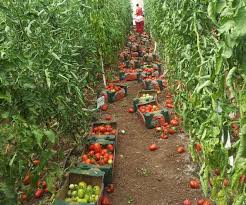
ok, here is what we do, we grow primarily beefsteak tomatoes in clay with a little sand. i wanted to try other varieties but the one year we did we had poor results and have been overruled since then on trying anything new.
our results have been between 15 - 30lbs of tomatoes, with 20 - 30 being normal. 3lbs seems to be a quart when processed.
i don't fertilize heavily. often if it is the first season i'm using an area (reclaimed from perennial flower beds or having been covered/mulched) i may not add any fertilizer at all. my fertilizer of choice when i do use it is a quart or two (per plant) of worms/worm castings/worm pee/worm poo (put right down in the hole). if i have time i may top dress/mulch with chopped alfalfa/birdsfoot trefoil and that is pretty much it.
irrigation, on heavy clay with some sand. first of all i plant the plants very deeply. i.e. i bury the starts (which are almost a foot tall by the time they get planted out) where only the top four or six leaves are showing. which means the stem and roots may be 8 inches below the surface.
i try to keep the watering going every two to three days when it is dry. rainfall is sometimes enough that i don't have to water much. each season is different.
sunlight, we have full sun. but a noticeable lack of sunshine during June has been happening sometimes and that can affect production. we won't begin harvest until the middle of August or later most of the time. a few earlies may show up but often they are affected by BER if the water hasn't been enough and the heat has been high.
there has been some troubles setting fruits if it gets really hot and dry. i'll go out and hose a plant down good when watering to get the flowers shaken and to cool things off.
we get late blights. our location gets foggy in the evenings. i never spray for anything. bugs or diseases. nothing i've tried besides spraying makes much difference. picking off diseased leaves or mulching. eventually the plants suffer. still we get results so i don't much mind.
i do pick off worms by hand. i go out in the morning and check for damage and then try to track the droppings to the worms. this past year there was only one worm found and it wasn't even on a plant. we thought that was strange... some years i've picked off a dozen or so.
we have planted between 16 - 40 plants. i'm not able to eat tomatoes much any more so that has been reduced the past few years to the low end. after one season of doing almost 300 quarts of tomatoes and then having to give most of them away because we didn't eat them was the last time we did that kind of crazy.
with our clay, we talk to the neighbors from time to time and also when i was working at the local small town library i'd talk to the gardeners and without fail, if they had sandy soil they struggled to get much of a harvest as compared to us where we have only really had one bad year (due to buckeye rot disease which came along with the starts themselves) and we still managed about 15lbs per plant.
this past year we did at the low end of that range again (15 - 20lbs per plant), due to me not noticing how dry things were getting and trusting that Mom was watering enough but she doesn't ever really give plants a good watering.
tomatoes do need a good amount of moisture if you are growing the larger kinds and want a lot of production.
things that i've heard about them but never done to fight BER, is to lime the soil well to keep the calcium levels up, but instead i just try to keep them happy with enough water instead.
if i were stuck in an arid climate with plenty of space i'd try to stick to minimal irrigation and try to dry farm varieties that can handle it. early varieties to take advantage of the cooler temperatures in the early season. planting the starts deeply enough so the roots have some protection and more chance to gather moisture.
also note that some tomatoes are determinant and will only give a relatively bunched production while others will keep growing and flowering as long as conditions don't do them in. beefsteaks keep on going for us. some years we pick the last fruits set right before the last frost gets them. the fruits aren't often the best quality, but for canning they are ok enough.
IMO it all comes out brown anyways...






 That sounds legit. I'm in. You are too funny!


