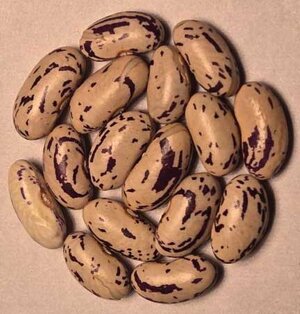
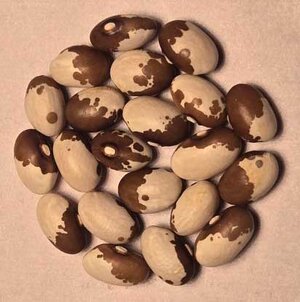
Musanze Cranberry - Pole Dry. This is part of the 35 pound stash of beans from Joseph Simcox that I picked up at Karen Goldens's house in Highland, Michigan a couple of years ago. I picked this one out of the freezer last spring labeled as Musanti Rwanda. That's what Simcox's writting looked like to me on the his original label. I feel like I've written about this before but anyway. I Googled Musanti by itself and got references to things Italian. Then I googled Musanti Rwanda and Google corrected me by bringing up the city Musanze, Rwanda. There is also a market in Musanze and this might just be where the bean came from. The bean was very productive in 2025.
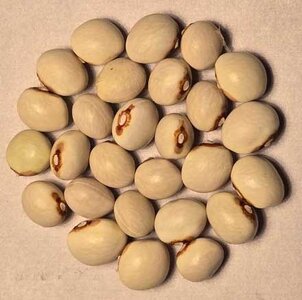
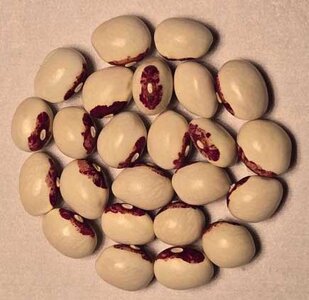
Nasieddu Giallo - Pole Dry. From a grower in Valpiano, Italy. This bean production was not that great but maybe in a different season it would perform better. Giallo in Italian is yellow. It does have a yellow figure around the eye.
Musanze Cranberry - Pole Dry.............................Nasieddu Giallo - Pole Dry
Would you like to change the name to what you found on Guy Dirix's website? Turkey 1 was rather generic wasn't it. I didn't much like the number in the name really. It does seem that Turkey was so generic that it probably wasn't right. This fellow who I got it from in Kentucky if he had actually gotten it from someone directly from Turkey. I kind of doubt that the person in Turkey would have sent it to him with the name Turkey 1. Let us change the name.
Would you like to change the name to what you found on Guy Dirix's website? Turkey 1 was rather generic wasn't it. I didn't much like the number in the name really. It does seem that Turkey was so generic that it probably wasn't right. This fellow who I got it from in Kentucky if he had actually gotten it from someone directly from Turkey. I kind of doubt that the person in Turkey would have sent it to him with the name Turkey 1. Let us change the name.
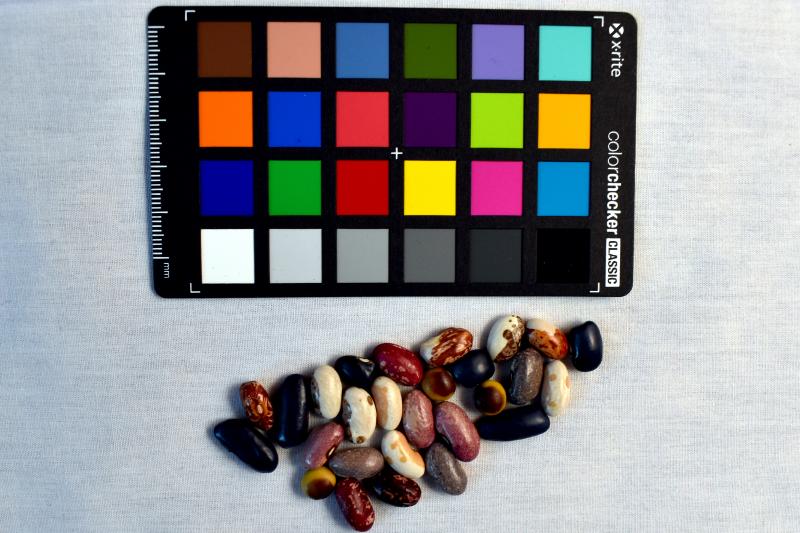
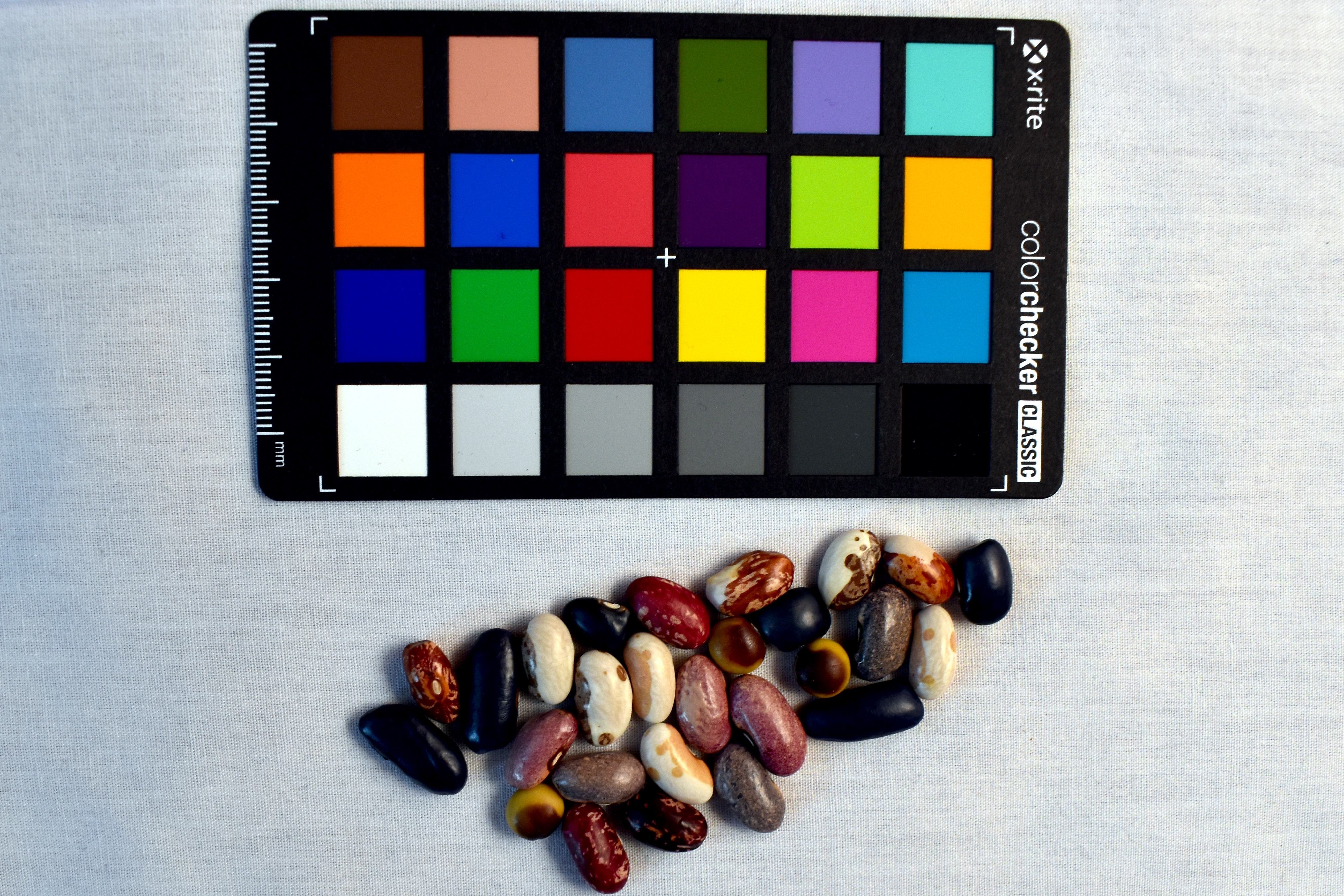
compared to my last effort at getting a bean picture to look half decent (in terms of color and details) this one i do like a lot more:
thumbnail image:
more detail:
i had to do some recalibration of my monitor anyways plus i tried out some new programs and learned a bit more on how to use them. probably still a long ways to go but i consider any progress as welcome as i've not really liked how the pictures were turning out before.
the image i used for generating both of these pictures was the same raw image from the camera taken when i was first trying to figure out this new camera.
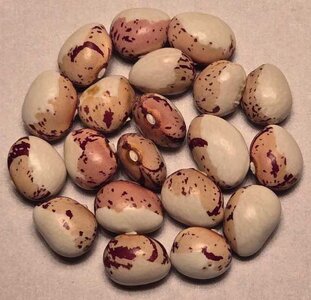
Nassieddu Marrone - Pole Dry. From Valpiano, Italy. This bean did not produce so well in 2025. I will probably regrow all the low producing beans in a different location sometime. Although not this year.
Nassieddu Pansaredda - Pole Dry. From Valpiano, Italy. This bean did fairly well although I would like to seed it do better than it did in 2025.
Nasieddu Marrone - Pole Dry.........................Nasieddu Pansaredda - Pole Dry
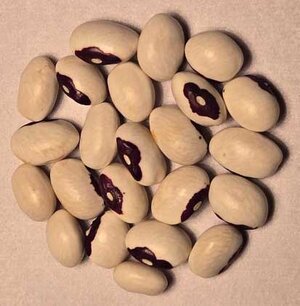
Nasieddu Rosso - Pole Dry. From Valpiano, Italy. I have no deep history of these Italian beans that come from a grower in Italy. This beans production this past year was below average but a little above the poorer performing beans. Nasieddu Viola- Pole Dry. From Valpiano, Italy. I have no deep history of these Italian beans that come from a grower in Italy. This beans production this past year was below average but a little above the poorer performing beans.
Nasieddu Rosso - Pole Dry....................................Nasieddu Viola
I've always really liked the 'Nasieddu' beans on your website @Blue-Jay , they're all such nice looking beans. I've been a bit afraid of growing them though; Italian beans have given me a few close calls so far. Most of them have matured in good time, but a few were really cutting it close. I never know when an Italian bean is going to fall in that dicey category, so I've started to kind of feel a bit leery of them. I enjoy them from afar for now, Lol.
I also have a small number of seeds of Nasieddu Viola but haven’t grown it yet. I don’t know much of the history either but NV was available from Deaflora via a swap for me. It is a Fagiola Di Sarconi meaning I think that it’s one of about 20 bean varieties linked with the Upper Val d’Agri valley in Basilicata, southern Italy and protected by a PGI. So I have the following notes:
Means Violet Nose in Corsican (or local dialect?)
Also known as Co Mussiddu, it is a variety of climbing bean with a round-ovoid seed, white in color with a light purple spot on the snout-shaped hilum, hence the name. It has a pleasant and delicate taste and is quick to cook. It falls under the “Fagioli di Sarconi” PGI: (http://enciclopediadeiprodottitipici.it/lavoro/fagioli-di-sarconi-il-cannellino-rosso/ ).
I also have a small number of seeds of Nasieddu Viola but haven’t grown it yet. I don’t know much of the history either but NV was available from Deaflora via a swap for me. It is a Fagiola Di Sarconi meaning I think that it’s one of about 20 bean varieties linked with the Upper Val d’Agri valley in Basilicata, southern Italy and protected by a PGI.
I used the link you provided to get into this website. https://enciclopediadeiprodottitipici.it/prodotto/fagioli-di-sarconi-nasieddu-viola/, When I clicked on the encyclopedia tab on top of the page what came up was the item you are looking for isn't available. However if i change that link and type in the name of rosso in place of viola. Then it brings up the name of that Nasieddu bean I inserted instead of viola. I type in in lower case just like the link. The link would only bring up Nasieddu Rosso for me and none of the other Nasieddu beans I have on my website. When I deleted viola in the link and just had nasieddu it brought up Nasieddu Nero. That reading gives the meaning of Nasieddu as "little nose".
There is not much history on each individual bean. You would think that with such long gardening history in Europe that someone would have documented many of varieties of every kind of garden vegetable and plants. Anyway it was an interesting little excercise and now we have the location where these beans might be from in Italy.
There was a link provided in the Nassieddu Nero page. When I clicked on it it brought up the Red Cannellini page with all of the following.
Sarconi is a small town in the verdant Agri Valley, in Basilicata, 600 meters above sea level. It's famous for its excellent beans, which are not only delicious but also beautiful. In fact, they're not a single variety of the legume Phasaeolus vulgaris , but rather several cultivars that derive their particular value from the terroir in which they grow and are distinct from beans grown elsewhere. The flavor is delicate yet well-defined, with a moderate sweetness. The skin is very thin, which is important for both its culinary appeal and digestibility. The beans' typical nutritional value is particularly high. Their uniqueness is due to the deep, fertile, alluvial soil, predominantly sandy, silty-clayey, and the climate, with its marked seasonal temperature variations. The local ecotypes that developed in this area (which, in addition to Sarconi, includes the municipalities of Grumento Nova, Marsico Nuovo, Marsicovetere, Moliterno, Monomero, Paterno, San Martino d'Agri, Spinoso, Tramutola, and Viggiano) include dwarf and climbing cannellini and borlotti beans, from which the locals have learned to make the most of them, using the most suitable varieties for soups, salads, and broths. There are numerous varieties of Sarconi beans, some with truly unique names. The Cannellino Rosso is a dwarf cannellini ecotype with a cylindrical, elongated, and tapered seed, white with reddish-purple, sometimes black, and irregular spots: it's also very beautiful to look at. In its waxy state, this plant produces long, pale yellow pods.
what is really interesting to me about the “Fagioli di Sarconi” beans is that many of the patterns have shown up in my own growouts here when i've never sourced any of those beans before.
so they are quite possible to derive from growing several varieties of the yellow wax beans that have the soldier pattern on them and various out crosses or variations on those beans and the other beans that i've grown.
a few years ago i finally stopped trying to grow a lot of these variations because i was getting so many and nobody really wanted them other than Pheasant, Spotted Pheasant and Yellow Soldier and Yellow Soldier was never stable enough that i could get it to continue.
at the last big seed swap i went to a few years ago i took a large bag of these mostly white variations of many kinds and don't know what happened to them, but if anything perhaps someone ate them after going through and picking out the ones they wanted to try to grow. it was a few quarts of beans in a large ziplock bag donated to the community table.
in my grow out for last year i had one or more again come out of the mix - i've seen the pattern(s) before.