

A Way to Really Mess Things Up

digitS'

Garden Master
Joined
Dec 13, 2007
Messages
29,236
Reaction score
41,922
Points
457
Location
border, ID/WA(!)
Someone once said that nature doesn't cause famine. It takes humanity, or a lack of it, to really mess things up.
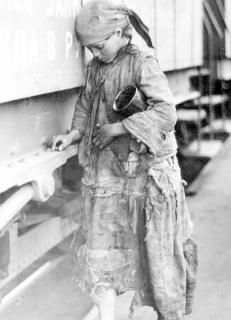

Girl in Saratov train station, collecting food.

The picture was taken in the early '20's after Russia had been involved in nearly ten years of war - WWI, revolution, & civil war.

Steve
 
Someone hasn't observed nature. Irish potato famine, for example. Periods when normal rains don't fall has caused mass migrations throughout history. A river flooding its normally rich flood plain can cause massive crop failure. Plagues of locust have been written about for thousands of years.

There is no doubt in my mind that mankind can and often does cause a lot of things and make things a lot worse, but feast or famine is a cycle of nature. Working together we can prevent a lot of suffering if we will, either in not causing them or mitigating the effects, but we will never stop it.
 
Ah, but what were the English doing in Ireland prior to that potato famine?

Where did the reliance on the single crop of potatoes come from?

We cannot all be food producers, perhaps, but violent disruption of our societies can destroy the opportunities for those who are to function and trade with those who are not.

Steve
 
Where did the reliance on the single crop of potatoes come from?

In part, from the Irish tradition of inheriting land. Instead of keeping the tracts together, it was split between many children. They came to rely on a crop that could keep a family alive on a very small plot of land. The English were not blameless, there is very seldom a simplistic answer to a lot of problems of this magnitude, but the English did not carry all the blame.

Violent disruption can cause famine, but the quote was all, not some. And it clearly said nature did not cause any. I don't agree nature doesn't cause any.
 
Pope Francis on February 7 addressed a session of 500 experts drafting a "Milan Charter" that seeks commitments during the Expo 2015 World's Fair to resolve food security issues.

Once again he deplored the paradox of John Paul II still stands: "There is food for everyone, but not everyone can eat" while "at the same time the excessive consumption and waste of food and the use of it for other means is there before our eyes."

Steve
 
I think you can throw another paradox in there: Many items sold as food have no food value. You may as well eat the wrapper.
 
I think you can throw another paradox in there: Many items sold as food have no food value. You may as well eat the wrapper.

I think that the root of that would be the government trying to get rid of excessive industrial byproducts via the food system. What "food" that did have a little bit of food value may have lost it through weeks of sitting around.
 

Latest posts

Back
Top