I know a LOT of places that have Yuzu trees for sale. the problem, as I said, is that I have yet to find one which specifies WHICH kind of yuzu they have. It would be a bit like going to a nursery and seeing a tree marked "orange". What kind of orange? Navel? Valencia? Juice? I'm not buying until I know that what I am getting is what I am after.
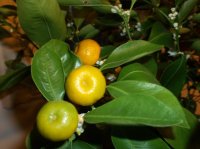
Add on that the odds are skewed against me. The kind of yuzu I am after is the one I sometimes refer to as the "old" yuzu. It's smooth skinned, bright yellow, and very, very small (about double what your caldomins are). For a long while that was the only one on the market (or at least, that kind and the other kind coexisted happily). But as time has progressed most of what is available has gone over to the "New" yuzu, which is bumpier, and a lot larger (about the size of a small orange). From the POV of the average Japanese consumer, the new one is by far the better choice. They mostly want the zest (for flavoring) and the new version is not only larger (so more zest) but peels easier (so it's a lot easier to make pieces that are easy to grate) To a Japanese person, the juice of the actual fruit is a bonus afterthought, at best. But I use the juice just as much as the peel, if not more , and by and large the new kind is almost totally juiceless, when you peel the fruit the insides are simply a mass of dry pith and seeds (on rare occasions I have found ones that are new size but have old insides, but those are ridiculously uncommon) So as it stands now I am reduced to trolling the Japanese markets hoping I see the right kind (I haven't seen one since the year before last, and they were rare even then) hoping to get a seed (unlike the new kind, the classic version is often seedless, and even when it does have seeds, it's usually one) hoping that seed germinates and makes a healthy plant (because of it's jiggled genes, a lot of seed not only does not come true (like any citrus) but produces trees that are not even viable, albinos and ones that cannot produce leaves or branches), and hoping I can tend the tree long enough to try and go outside.
Kabosus look a bit like the new yuzu (a little smaller and less bumpy) but are different (they have very sour juice, like vinegar)
Sudachi loom like the classic yuzu, but their juice is not only sour, but intensely bitter (like a bitter orange) you can use it in meat marinades (to make a sort of Japanese mojo sauce) but that's about it.
Supposedly the Ichang is the most cold hardy of all of them, but it's "lemons" are kind of flat tasting (usable for lemon pie, but apparently no substitute for the real thing).
Tcnically, trifoliate orange is even more cold hardy than that, and CERTAINLY can grow well up here (there is or was a hedge of them by some building off union Square, and a MASSIVE tree on the grounds of the Bronx Botanical Garden (just outside the gift shop) But there is debate on whether it's fruits (which look like oranges, but are fuzzy) are edible (some people make bitter marmalade out of them, but most consider them too bitter to consume.)



 cooking.


