I have been having good luck with cages made from woven wire fence cut to length and forming a circle around the tomato plant. I also use stakes to hold the wire cage in place in our winds.
Our tallest cherry tomato plant is 11-12' tall, growing nicely straight up a strong piece of twine that is secured to the soffits directly about the plant near our front door, very much as one would grow a cordon tomato in a green house. If only I could grow all of my tomatoes this way-- but sadly, I only have one front door.

In terms of mistakes, allowing a bunch of red Romaine lettuce to bolt and go to seed amongst my sprawling Kathleen's Wild Sweet Cherry was a bit of a disaster, and something I do not plan on repeating. What a mess, with the lettuce and tomatoes all tangled up and absolutely covered in aphids by September.
And like you Heirloomgal I had an awful lot of extra tomato seedlings this spring, with more than 100 largish plants that I tended for many months before ultimately giving them away. That was aligned with my stated goal this year, in an effort to encourage others in the community to try their hand at growing their own fresh produce. So mission accomplished. But even though I don't want to do that again, I know that when it comes to gardening I exhibit very little self-control. My theme song could be Queen's 'I Want It All'-- and I want it now. I clearly need to change my tune. Lol. I made a note for next year to give away extra seedlings promptly when they are still very small, rather growing them on before gifting them. My hope is to grow fewer varieties, with at least 3 of each type so I can identify the best qualities of each plant. Once I decide on the varieties I will start extras of those cultivars only if friends express interest-- but not otherwise. It was fun pretending that I was a tomato nursery this year, but it definitely made it a challenge for me to pot-on my own plants in a timely manner.
In other lessons learned, there is a commonly held belief that tomato plants will suffer if set out too early. I found the opposite to be true with the early cold-tolerant cultivars that I punted outdoors in late March. They were uniformly stronger and healthier than the ones I babied indoors under lights. So maybe some of the tomato advice that we get is based on growing main season cultivars, and perhaps we would do well to try different approaches with varieties that are outside of that planting window. I also think I held on to those early cold-tolerant tomato plants in the garden for far too long, with the exception of a very few that continued to fruit for many months (Andrina, Glacier, Red Robin). Learning when to let go would be an asset (not my strong suit so far), and it could free up valuable garden real estate that could be planted with other more productive crops.
The biggest mistake I made this season may have been neglecting to harvest efficiently in advance of rainfall; I lost a lot of tomatoes this way to splitting, and I think it could have been largely prevented by doing a better job of picking them in a timely manner.
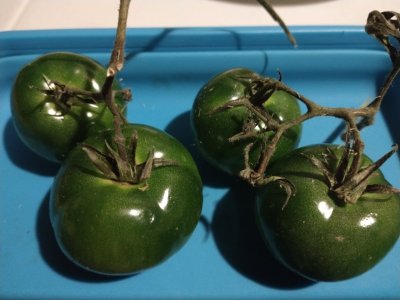
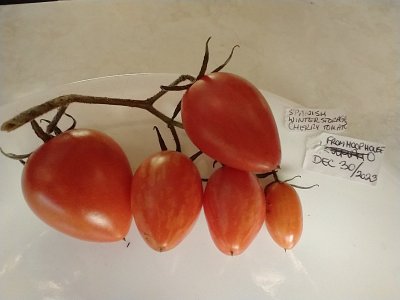
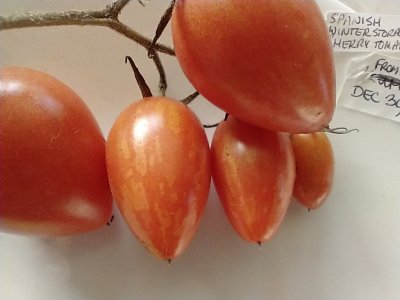
And lastly, for anyone wishing to try late season tomatoes I would encourage you to find a spot with some protection from the elements for at least some of these plants, or maybe grow a few in large pots that can be moved. The smallest amount of cover seemed to keep the plants looking healthy and green well in to the autumn, which encouraged weeks of extra fruit production (at least in our area where frequent late-season rainfall is typical). Sadly, a lot of the late fruits that I am harvesting for storage were exposed to the elements; they are not storing well as they are blighted, so they will have to be tossed out. If only I could have planted them a few weeks earlier they may have matured before blight set in. So next year my plan is to try starting the late season 'storage' tomatoes 3-4 weeks after the main season plants, with a small insurance succession 2-3 weeks after that. It will take some trial and error to find the sweet spot so the storage fruit matures to a harvestable green stage around the first week of October, which for us is when blight often arrives and takes out the plants. If the timing can be worked out it could make many aspects of growing tomatos easier, including spreading out the harvest rather having than the feast and famine pattern that many of us are accustomed to. It would also mean fewer seedlings in the house at one time in the spring, which would be great.