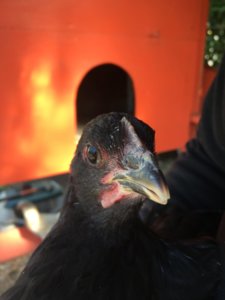
That's a lot tougher call than it should be at that age, especially since I want it to be a pullet so badly. The black pigment is masking the color of the comb but the wattles look kind if red. I think I see some sharp hackle feathers, some rounded ones too. Comb size isn't horrible for that age. Like Seed I could be wrong but my money is on male. That's hard to say.
@Ridgerunner I always thought that you had the prettiest flock. What breeds did you mix up to achieve such a lovely flock? I know you had Speckled Sussex in the mix.
Speckled Sussex, Delaware, Black Australorp, Buff Orpington, and Buff Rock from hatcheries. I got some designer Ameraucana from a lady working with a consortium to create a new color/pattern of Ameraucana, black mottled, to get the blue/green eggs.
@canesisters can you expound on the virtues of Speckled Sussex?
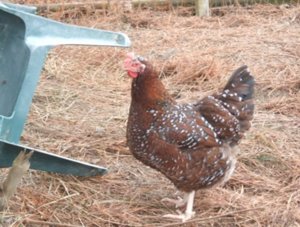
I only kept one Speckled Sussex hen, I don't think that's enough to be statistically significant for all SS. Breed tendencies are just that, tendencies, any one individual can vary wildly from the average. Another way to say it is that you need enough so the averages mean something. Anyway, that one hen never went broody and laid medium sized eggs but a lot of them. Kind of light brown if I remember right. She was not the dominant hen but was closer to the top of the pecking order than the bottom. She was a nest hog, took a while to lay her egg and would not share a nest. Cane's story is different but I don't handle mine or try to make them pets. And she had more.
I had two different SS roosters, one from Cackle and one from Meyer. Both made a nice carcass and yes, SS are beautifully feathered. Both were good flock masters. One of them would help a broody hen take care of her chicks if some got separated from her. The same one was human aggressive toward my chicken sitter, a high school girl, but she started out afraid of them. He could tell.
All in all not my favorite breed, that would be Black Australorp. But not bad.