Branching Out's Seeds and Sprouts

Was able to sow Napoli carrots and also Taunus beets in the former garlic patch. I covered the planting area with a board, to keep the seeds cool and moist until they germinate. A mole or vole had made a tunnel through the soil before I even finished sowing; I hope that they were making tracks out of my garden. The pesky rodents ate most of my carrot crop in 2023, and I don't want a repeat of that.
Voles, such a varmint. I found a track today leading to my beans from the tomato bed. I saw the fluffy dirt and exposed the tunnel, close call. I am tempted to buy a gas bomb for tunnels and plunk it in there, but I'm not sure how well they work for voles. They definitely work 100% for groundhogs, so possible. Bit ghastly though.
 
Tomato plants seem to be a favored location for voles, @heirloomgal . In my distant gardens, I was sometimes only made aware of their presence when a coyote would show up and dig them out.

My personal solution came to be a trickle of water down the burrow. It didn't seem to require a large amount, just a steady trickle for a good long time — like, maybe 90 minutes. The burrows are probably not very large but the voles are likely to be clever enough to design them to handle the average rainstorm. A once-in-a-century catastrophic flood always seemed to work.

Steve

 
Went out to the countryside to pick up a load of two year old composted manure, as well as sacks of alfalfa pellets and a couple of compressed bales of straw to mulch the garden. On the way back the front end of our old 1985 Ford pickup started to jiggle, and my husband had to put on our hazard lights for the remainder of the way home. The front driver's side wheel was burning hot to the touch; he figures the front brake is the trouble spot. At least we made it home, so he can work on the truck in our shady carport. For a while there I thought this was going to be the load of manure that broke the camel's back. 🤣
 
Tomato plants seem to be a favored location for voles, @heirloomgal . In my distant gardens, I was sometimes only made aware of their presence when a coyote would show up and dig them out.

My personal solution came to be a trickle of water down the burrow. It didn't seem to require a large amount, just a steady trickle for a good long time — like, maybe 90 minutes. The burrows are probably not very large but the voles are likely to be clever enough to design them to handle the average rainstorm. A once-in-a-century catastrophic flood always seemed to work.

Steve

Funny coincidence, we had a major, major downpouring today. I hope that did it. I checked that little exposed tunnel and it was full up with water.🤞
 
Funny coincidence, we had a major, major downpouring today. I hope that did it. I checked that little exposed tunnel and it was full up with water.🤞
And in my instance the surface tunnel may have appeared as a result of irrigation as well. I had firmed the carrot planting site and then watered it very heavily, to make sure there would be moisture down deep for the carrot roots once the seeds germinated. So that likely flooded the burrow, and set the furry menace into motion.
 
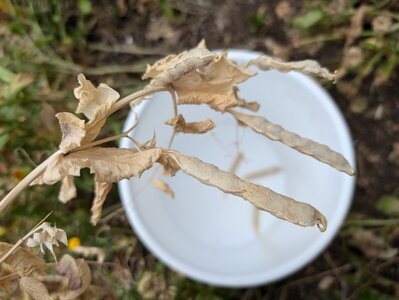
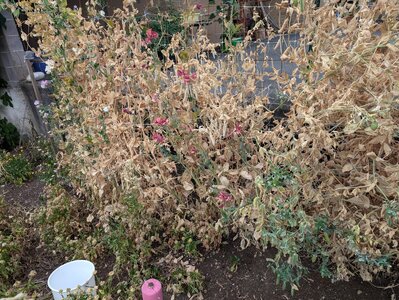
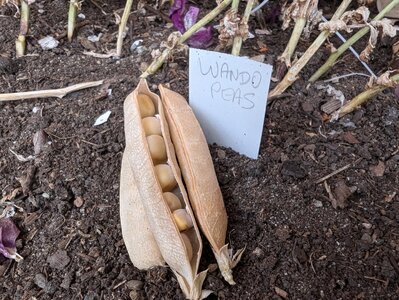
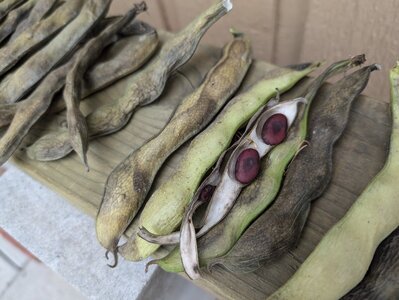
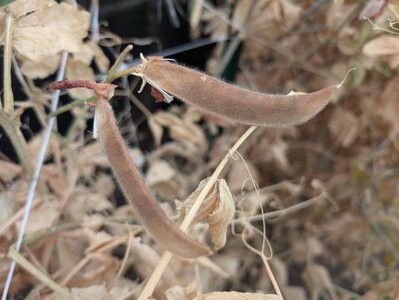
We are in a warm dry stretch, which looks to be ideal for seed saving. Yesterday morning I spent an hour harvesting crisp and crunchy pods of sweet peas and shelling peas. Most of the dry fava pods got picked too. I grew two cultivars this year, in gardens a good distance apart and isolated by time-- or so I thought. The large seeded Italian heirloom fava was started in early January, and a new small seeded red fava called Red Epicure was started about 10 weeks later on March 12th. The dry pods of each type were harvested for seed yesterday. This is a puzzling result, as all of the literature suggests starting fava early for best results.
 

Attachments

  • PXL_20250725_151935548.jpg
    PXL_20250725_151935548.jpg
    126.2 KB · Views: 79
  • PXL_20250725_151947057.jpg
    PXL_20250725_151947057.jpg
    474.5 KB · Views: 98
  • PXL_20250725_152701563.jpg
    PXL_20250725_152701563.jpg
    343.8 KB · Views: 76
  • PXL_20250725_193850157.jpg
    PXL_20250725_193850157.jpg
    186.2 KB · Views: 86
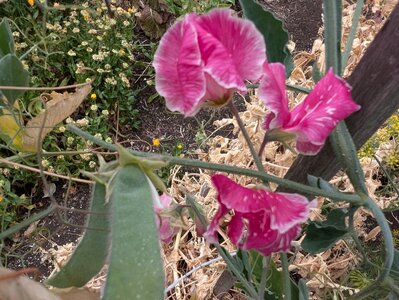
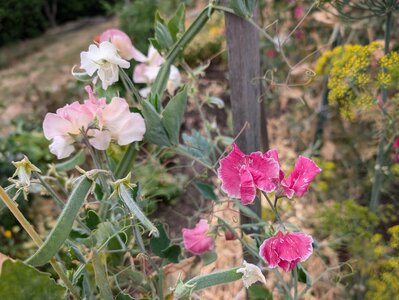
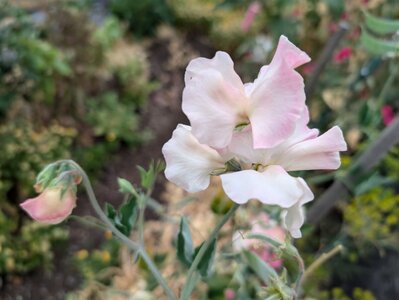
There is a remarkable sweet pea vine developing. I had a singleton seed of one variety, a ruffled cream blossom with a slight pink blush on the edges. It's really pretty. Now the plant is beginning to set seed, and a few of the late flowers are blooming in a completely different colour-- hot pink with white flakes. I found a reference that suggests that this can happen with sweet peas: https://sweetpeagardens.com/blogs/news/color-chaning-sweet-peas

Maybe I should mark the hot pink flowers, and save those pods separately? Theoretically the genetics should be the same for each flower, as they're all on the same plant. 🤔
 

Attachments

  • PXL_20250725_154251380.jpg
    PXL_20250725_154251380.jpg
    314.9 KB · Views: 83
  • PXL_20250725_152214714.MP.jpg
    PXL_20250725_152214714.MP.jpg
    137.2 KB · Views: 79
  • PXL_20250725_154344583~2.jpg
    PXL_20250725_154344583~2.jpg
    190.2 KB · Views: 92
  • PXL_20250725_154205944.jpg
    PXL_20250725_154205944.jpg
    113.8 KB · Views: 83
There is a remarkable sweet pea vine developing. I had a singleton seed of one variety, a ruffled cream blossom with a slight pink blush on the edges. It's really pretty. Now the plant is beginning to set seed, and a few of the late flowers are blooming in a completely different colour-- hot pink with white flakes. I found a reference that suggests that this can happen with sweet peas: https://sweetpeagardens.com/blogs/news/color-chaning-sweet-peas

Maybe I should mark the hot pink flowers, and save those pods separately? Theoretically the genetics should be the same for each flower, as they're all on the same plant. 🤔

i think it won't matter - they're still lovely either way. :)
 
Maybe I should mark the hot pink flowers, and save those pods separately? Theoretically the genetics should be the same for each flower, as they're all on the same plant. 🤔
My instinct and horribly basic understanding of genetics suggest that you wouldn’t get separate strains but would have the same happen again from both batches, ie. pale flowers until the plant is moving into older age.

A rather lovely thing to happen - two treats in one.
 
Back
Top