2026 Little Easy Bean Network – Plant A Garden, Water Your Soul, Join Our Family

Wow, those are gorgeous! I think i like the first and second to last the best.
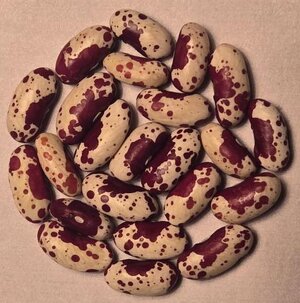
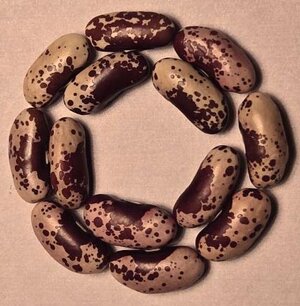
I think these two photos are the ones you like the best. Would you like a sample of each of these to keep and grow. Just in case I decide these beans are taking up too much room in the freezer. If they are in fact still stored in the freezer and I didn't already eat them. I could send you a sample of each if you want them. Just PM me your address and I'll get them to you sometime. I'm usually sending packages out once or twice a week.


Victoria Borwn Eye OT-3-21-122.jpgVictoria Brown Eyes OT Different Shade.jpg
 
Russ's 2025 Big Bean Show Day 52

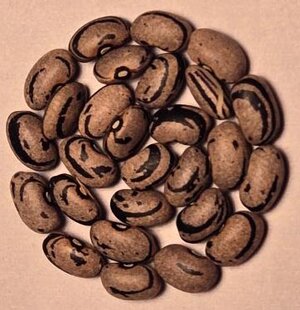
Zebra Aus Teneriffa - Pole Dry (photo left) From a grower in Willich, Germany in 2019. It was part of a bean trade. This bean did very well this past summer and does well wherever I grow it. Small seeds.

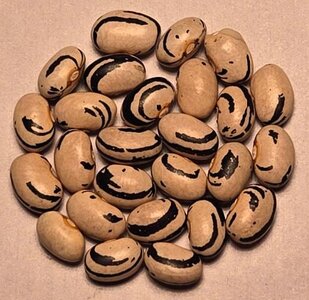
Zebrinas - Pole Dry (photo right) This bean did well also this past summer. From Decoy1 in 2019. Small seeded also. Both beans are very productive.

Zebra Aus Teneriffa.jpgZebrinas.jpg
 
I think these two photos are the ones you like the best. Would you like a sample of each of these to keep and grow. Just in case I decide these beans are taking up too much room in the freezer. If they are in fact still stored in the freezer and I didn't already eat them. I could send you a sample of each if you want them. Just PM me your address and I'll get them to you sometime. I'm usually sending packages out once or twice a week.


View attachment 80755View attachment 80759
Oh yes please! I'll grow them this year. Is there any chance i could get a sample of your signature "blue jay" beans in that as well? I have a color blind 7yr old and I think he would be amazed at beans he can see.
 
Hello! I'm absolutely new to growing beans. I am interested in trying this though, and I have a decent amount of space to work with. I am already planning on growing scarlet red runner beans and rattle snake pole beans, but the idea of helping some that need to be grown is very fun. As a bonus I homeschool and would love to teach our kids about this.
I need some basic teaching though. 😅

How far away should varieties be planted to keep from crossing? Or should I only grow 1 cultivars a year??
How do I know which ones are safe to eat green does the "snap" name denote that? Since I know red runners are good green but they dont have "snap" in the name I'm a little confused.
Do "bush" beans still need support? 🤔

There is probably more I need to know, I just dont know to ask it! Teach me your ways! 🤓

Welcome @Rillowen!

This will be my second season of growing Network beans and finishing up our first year of homeschooling.

I had originally planned to have my daughter grow bush dry beans this year but decided that she'd be better off growing either a pole or bush variety of snap beans as I don't think she has the patience to wait for the pods to dry. Thankfully I have seeds of a few with yellow, purple or streaked pods to capture her interest.

I've been gardening for many years and am by no means an expert, but sometimes crosses happen. I have a family heirloom bean that suddenly started throwing out an occasional plant with a purple pod and seeds of a different color. A couple of the Network beans I grew last year produced a few surprises too.

We plan to incorporate several flowers into the garden this year and trying to determine where to place them in relation to the beans.
 
So do volunteer beans happen very often for anyone?

Noticed I have three 3" tall plants where I grew the Ground Squirrel off-type(?) last year and have been covering them on cold nights. Only other time I've ever had volunteer beans was in the spring of 2021. US zone 6a. A little more snow than average this winter and I believe the lowest temperature was -10F
 
Heirloomgal can you give me a link to where you found that? Because I have never once seen a honeybee on a bean flower. I see bumbles on my peas and runnerbeans all the time, but the only bees I've ever seen working common bean are the little tiny ones (sweat bee types) that I don't know the name of. I get beans crossing at my place, and we do have feral honeybees in the woods, but most of the pollination done here is wild bees as far as I can tell.

I found this paper about a study in Brazil, they list a lot of pollinators that were seen, but the only one that actually tripped flowers effectively in common bean was a species of carpenter bee (Xylocopa sp.)
Sure @oxbow farm, I don't have a link because I used an AI research tool so I copied and pasted the info here. I think bee information would be pretty specific to region, and I'd think Brazil would be quite different than North America, though I haven't researched it so am not sure. Funny to think that without the invasive bees, we'd be smooth sailing pretty much with seed saving re: self pollinating crops.


🐝 Most problematic bees for seed saving​

🍯 Western honey bee​

Biggest overall issue

  • Flies long distances (2–5+ km)
  • Visits many plants of the same species in one trip
  • Strong flower constancy → efficiently transfers pollen between varieties
  • Very abundant (managed hives + wild colonies)
👉 If you’re growing multiple varieties of the same crop (e.g., squash, brassicas), honey bees are the #1 cause of crossing


🐝 Bumblebees​

Major cross-pollinators, especially for certain crops

  • Native and very common in Ontario
  • Fly hundreds of meters to a few km
  • Excellent at:
    • Tomatoes (buzz pollination)
    • Peppers
    • Beans (can force flowers open)
👉 They’re extremely effective pollinators—which also makes them excellent at mixing genetics


🪵 Giant resin bee​

Localized but increasing concern

  • Visits large flowers (beans, legumes)
  • Can move between plants within a garden or neighborhood
  • Still less impactful than honey bees overall, but worth noting as it spreads


🌼 European wool-carder bee​

Indirectly problematic

  • Doesn’t cause the most crossing itself
  • But aggressively guards flower patches, changing which pollinators visit your plants
👉 Can skew pollination patterns in small gardens


🧠 What actually matters more than species​

For seed saving, these factors matter more than which bee exactly:

1. Crop type (huge difference)​

  • High risk (easily cross):
    • Squash (Cucurbita spp.)
    • Brassicas (kale, broccoli, mustard)
    • Carrots, beets
  • Low risk (mostly self-pollinating):
    • Tomatoes
    • Beans (mostly)
    • Lettuce


2. Bee behavior​

  • Long flight range = more crossing
  • Preference for one plant species = more efficient pollen transfer


3. Garden density​

  • Urban/suburban areas with lots of gardens = more crossing risk, especially from honey bees


⚖️ Bottom line​

  • Worst offender: honey bees (by far)
  • Also important: bumblebees
  • Minor but emerging: giant resin bee
  • Most other bees = low impact on seed purity


🌱 Practical tip​

If you’re serious about seed saving:

  • Use distance isolation (hard with honey bees)
 
Back
Top