The Tinga dillema, to stake up or to not stake up. That is the question. If anyone has suggestions how this might be done at this advanced point, please share.
Experiments. And the accompanying mystery of results. Hard to determine cause and effect, but one tries.
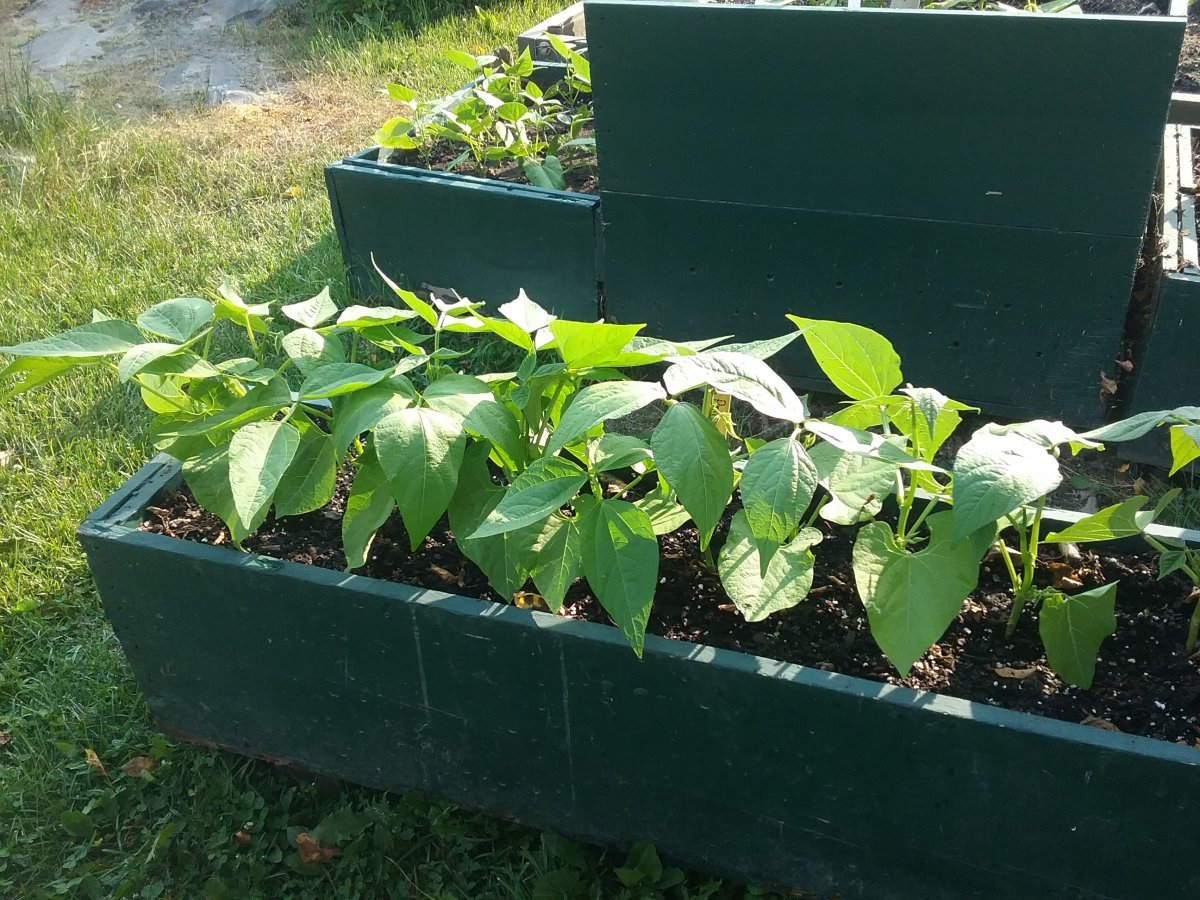
#1 I have no idea why these are my only bush beans so far to get vigorous, and why they are nearly the last ones planted and still are bigger than all the rest by a significant amount. (The beans behind were planted
at least a week earlier.) The bigger ones are also much more crowded. All I can figure is that maybe the pure compost I planted them in has had an effect and beans are more sensitive to soil fertility than I thought. However, I have a single row in my raised bed that was filled in 100% with this same city compost and the bush beans there aren't the same as these. Could a small, raised planter be that influential in terms of heat? Another possibility is the behind bean seeds (Cyrus Grays) were not harvested last year whereas the big plants were from 2022 seed. I wonder if seed freshness could result in such growing differences?
Never planted beans in pots, and thought I'd try just for the fun of it. I had extra dirt and planters so what the heck. It would appear that at least 1/2 the beans fried while germinating in here under landscape fabric. Temps were to nearly 90F at the time. Not an experiment I'll repeat. Planters are pretty small and cookable in high heat. I may transfer some of these to my empty soybean spots.
Decided to remove some of the peppers from the greenhouse for awhile. Just too many aphids with all this high heat. I thought a day or two out in the cool temps would slow the growth a bit and give predators a chance to clean them up. It worked. But I'm going to leave them out for bit more so any eggs will hatch and get eaten first before going back in. I may even leave some to grow outdoors since the outdoor peps are doing pretty good too and it will be less crowded. I can compare greenhouse grown to outdoor grown in the same varieties this way as well.
We need a draining trench in the lower part of the garden, and DH is all *big ideas* about it. I thought I'd try just a small groove dug to exit on the left. Had our first chance to see if it works with the last 2 days of rain, and it did. DH was not super impressed with my amateur attempt, until he saw that it seemed to work, lol. No more duck pond in this area. She's now using my kiddie pool (that was supposed to
me for me to cool off in).
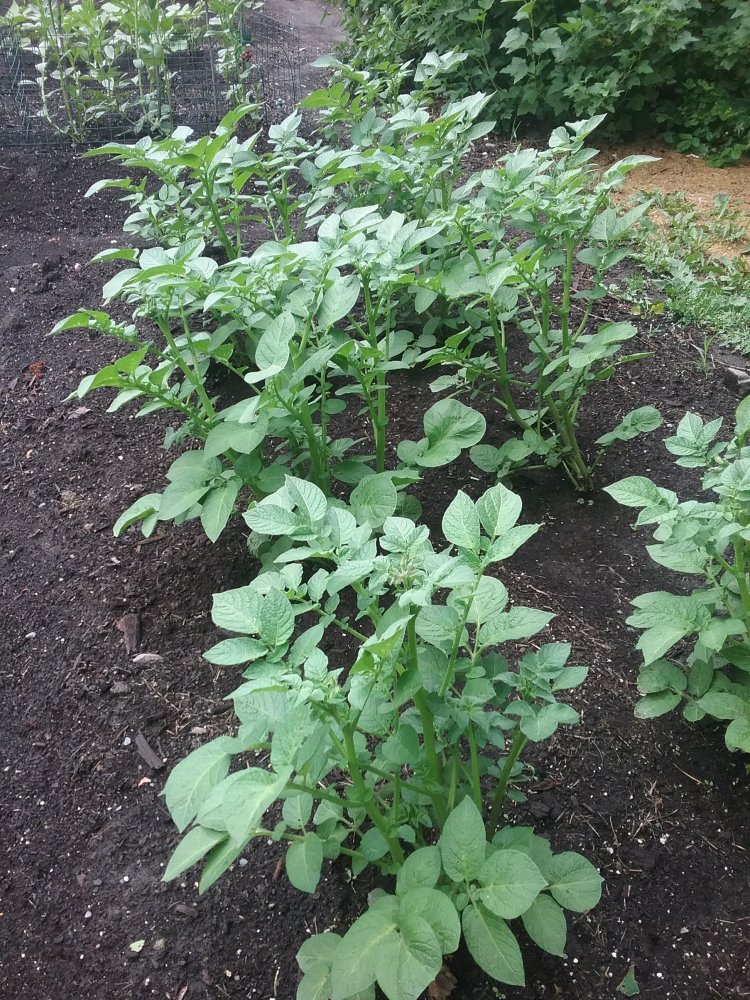
Little 'Warba' potato patch. I think the bag had 6 potatoes in it! I'm experimenting with depths here. I put them lower in the garden this year where the soil is deeper, and dug really deep holes. Emergence took much longer because of how deep I put them. I'm hoping that will increase yield because this variety is known for a-being the earliest of all varieties b-being low yielding. I'll be curious what the results will be. I'm gonna hill them too, something I never do.
I kept wondering what is wrong with this tomato plant? And it's not yellow but whitish flowers. Then I remembered that this variety ('Lutescent' aka Honor Bright) is known for it's odd flowers and awful foliage, it's the genetics of the plants. It certainly came true to type on that point. Green is not strong in the leaves. The whole plant is an oddity - apparently you get green, then waxy white, then yellow, then red, then full maturity orange tomatoes on the plant all at once in the fruits various stages. Said to be a good 'storage' tomato, which probably translates to

. But it's an experiment so we'll see.
Little 'Pinta' bean patch. Like to celebrate the Spain connections. Part of my heritage apparently.
A new cilantro to me. I don't usually try different ones because they are all more or less the same it seems, variations mostly being in bolting tendency. But this one is a feathery leaf type, where it looks like it does when it goes to seed throughout it's whole life span. Slower to bolt they say, a bit milder taste. Which is okay by me. Fresh cilantro is pretty strong anyway.



 ). Chipmunks & mice can harvest soybean seeds as they begin to ripen though... and will do so until stopped. A few times the loss of a variety was nearly total. I have about 50 weather-proof mouse traps, and will put 4-5 under a row when the pods fatten, or at the first sign of damage.


