I once want to open a similar thread, thanks
@Zeedman!
This year, I tried to remove the main stems and even sub stems of most of the Dahlias to:
1. reduce the size of the flower, especially the dinnerplate varieties like Cafe au Lait - quite successful, the flowers are half smaller and much more suitable for the cut flower purpose. Besides, as I planted most of my Dahlias in the 10 Liter pots, having multiple smaller flowers makes the overall look and feel better than a single gigantic monster flower. The plant is more balanced and stable, too.
2. delay the flowering time - I won't say it's fully successful; after all, it's still the first try. But, it could be a practical workaround. For example, the plastic planter area - where is a small tulip garden in spring.
After tulips were lifted from mid-June, I planted the small (but sprouted) Dahlia tubers here, while the bigger/fatter tubers were transplanted directly to the 10 Liter pots.
My original idea is to use these planters to grow the tubers (it's part of my small business, like tulip bulbs). If they flower, that's fine; if they don't, that's also good - the nutrition will be fully stored without consuming energy to flower.
So far, the foliages from the tiny, single tubers are growing nicely. I kept removing the main/sub stems until mid-August. It delays the potential blooming time and encourages more side shoots and foliage, which is good for producing nutrition.
Now, almost every plant forms some little flower heads. If our first frost arrives on time or later, say after Oct-15, I might still have a chance to see some lovely Dahlia flowers.
However, if the frost arrives earlier, well, then my harvest would be the tubers, nothing to lose.
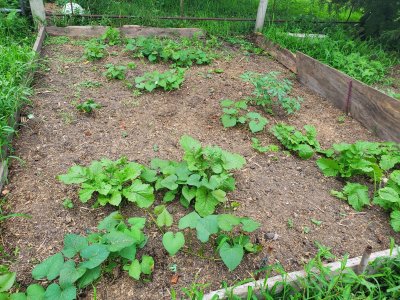
Another lesson from this plastic planter area is that even container gardening can create multiple crops from spring to autumn.
The first crop for all planters: tulip
The second crop for half planters (which I lifted tulip bulbs earlier): carrots, beetroots, potatoes, sweet potatoes (for leaves), and scallions. After carrots and beetroots were harvested, the third crop, mini Chinese cabbage plug plants, checked in. They will check out by November, and the new tulip bulbs will be the next residents until next June/July.
For the other half planters whose second crop is tiny Dahlia tubers, I will put in the new tulip bulbs right after the first frost in Oct, cover them with a thick layer of compost, and then plug in young lamp lettuce on the top.
So, those plastic planters always have something growing inside, whether it's tulips-root veggies-leafy greens-tulips or tulips-dahlia-lamp lettuce-tulips.




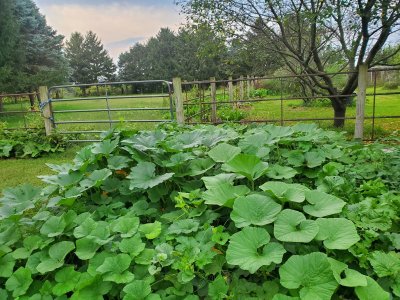


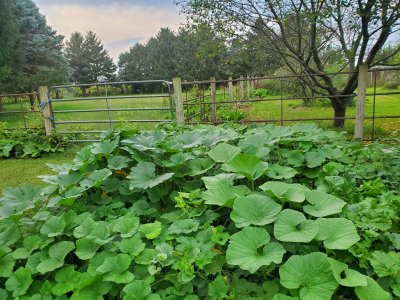
 The snakes are happy there too!