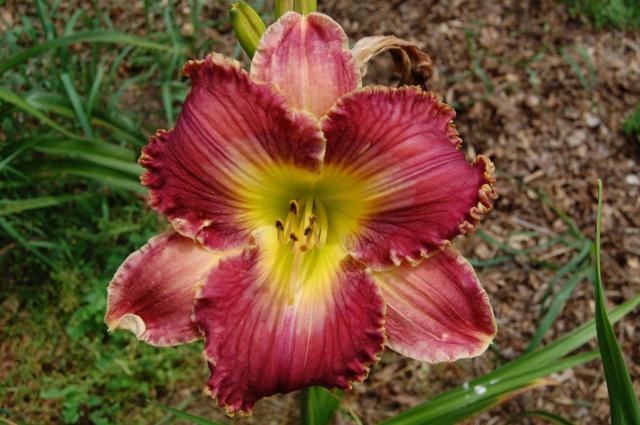
Not species -different chromosomes
Daylily chromosomes come in sets of eleven. Cells of diploid daylilies contain 22 chromosomes (two sets). Triploids contain 33 (three sets), and tetraploids contain 44 (four sets). Because the chromosomes in a nucleus must divide in half to form ova and pollen, triploids, with an odd number of chromosomes, are usually sterile. Tetraploids have not been found in species daylilies.
The original daylilies are diploids. The tetraploids were made from chemical conversions. I have been trying to get my hands on the chemicals but they are dangerous and I have not found a lab that will sell them to me. Just for the experience of it. So cross pollinating is tet to tet or dip to dip. There have been some exceptions and I guess some spontaneous mutations.
Most plants become big over time though some are more vigorous than others. The larger fancier blooms take more time to expand. Most of the breeders are in the south so their cultivars are not as vigorous up north. They go from a seed to a blooming plant in 8-9 months. It takes me 1-3 years for a seedling to bloom. 1 year is rare.
I remember seeing a story about an evergreen farm. They had a low growing variety that was struck by lightning. The needles turned bright yellow and stayed that way. It's clones became a huge seller named "Motherload." I have wanted to try applying electricity to a plant or seeds to see if I get any results. But, I am a dreamer not necessarily with enough no how to pull off a safe experiment like that. Of course I would not want to spend and money on my fanciful idea. I have great fun. My 2 older grandsons have a great interest in gardening and daylilies. Of course they are still little. I hope one will carry on my fun when I get too old.