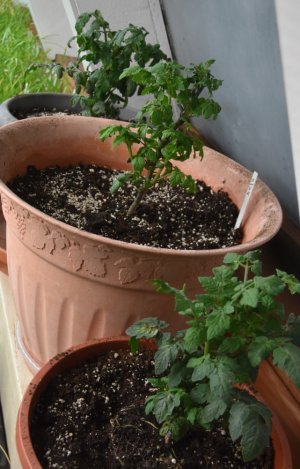
We have passed that infamous date of 3/17 when I started plants, one year. It was a serious mistake. Spring might have been late that season but ... My plants really suffered - I just didn't have indoor room for an unplanned up-potting.
Spell check is apparently bad at numbers. Or Nostr@digits is dreaming of the future (as are we all).

That is roughly the same mistake I made a few years back, starting transplants in mid-March. The plants quickly outgrew the lights, and some had to be put into the solar greenhouse while it was still cold. The tomatillos grew leggy & died; and while the tomatoes & eggplant limped by with only a few losses, they looked pretty bad by transplant time. Fortunately, they recovered once transplanted.
Even now, I'm still experimenting to find the best planting dates for my location. The most important finding has been that there is no "one size fits all" planting date; for transplants to be the same size on a given target date, they need to be started on a staggered schedule. Onion seedlings are NOW. Habanero peppers & their kin, as well as some herbs, are very slow growers (and often slow to germinate as well). Those get started earlier than other peppers. Solanaceae transplants, in descending order (in T - days before transplant) are:
C. frutescens peppers (Habanero & related) and some herbs & perennials (T - 75/90 days)
C. annuum &
C. baccatum peppers (T - 60 days)
Eggplant (T - 7 weeks)
Tomatoes (T - 6 weeks)
Tomatillo, litchi tomato, garden huckleberry (T - 4/5 weeks)
While still a work in progress, that schedule worked well for me last year, in terms of rotating plants out into the solar greenhouse, and their (mostly) not becoming over-grown prior to transplant.
Because I am growing for seed, I start a lot of transplants for veggies which would otherwise be direct seeded. Transplants Round #2 (roughly T - 2/3) are cucumbers, squash, gourds, and other cucurbits. Those are usually started under the lights as the nightshades move into the greenhouse (the gourds first, since their germination can take a little longer). All cucurbits are moved into the sun as soon as possible following germination; either out on the deck or table (weather permitting) or into the greenhouse. Mouse melons / Mexican sour gherkins, for those who might grow them (I no longer do) can be started several weeks earlier, since they are slow growing, and more tolerant of artificial lighting.
Beans of all species are last, transplant Round #3. Transplants are really only
necessary to stretch my growing season for limas & some of the long - DTM beans & yardlongs. However, since I am growing beans for seed & have very temperamental Spring weather, transplants vastly improve the chances for success... and help to eliminate empty spots within rows. It has proven wise to keep a few backup transplants even for beans which are direct seeded; they've saved me from failure more than once. With our early Spring warm-up last year, I chose to skip those bean backups - and deeply regretted it, when heavy rains drowned out many of my beans shortly after germination.

Lesson learned: if a system works, don't change it.
My small greenhouse ends up being really crowded just before transplanting, especially if weather delays that date... I've been trying to talk myself into a slightly larger, heated greenhouse for years now. That would even allow me to sell some heirloom plants locally. The only thing holding me back at this point is the heat source, which due to building codes, would have to be portable. Last year I ran an extension cord out to the greenhouse & put a small electric space heater there for a few cold nights; it at least kept the temperature above 50 F. degrees, which helped to prevent yellowing.