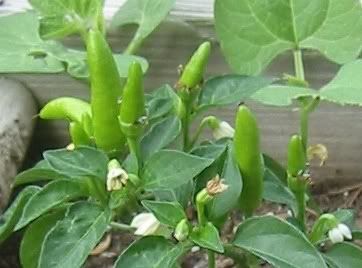
Grow 4 Food said:
Because you mentioned the cross polinate:
This year I have planted a sweet bell pepper plant right between (12 in stem to stem) 2 hot pepper plants. I have always loved the flavor of a bell but just thought it needed some power behind it. Now all I have to do is wait in the bees to do their work!
A Word on Cross Pollination (Hybridisation)
A chile seed (like any other seed) is the mature ovule of a plant. It contains all the genetic material, and stored energy, to grow into a plant (potentially) displaying the same traits as its parent. However, hybridisation (cross-pollination between chile varieties), introduces new and different genetic material and the effects of this hybridisation can be seen in the next, and future, generations. Seeds identified, and sold, as F1 hybrids identify first generation hybrids. Avoid saving seeds from these plants since the only predictable characteristic of the second generation is that - you cant predict it!
Almost all known species of chile plants will self-pollinating. However, with the aid of insects, they are also very promiscuous - readily cross pollinating with other species of chile. This cross pollination may result in viable seed. Cross pollination within the same species is almost certain to result in viable, and very vigorous, hybrids.
The most common Capsicum species, Annuum crosses prolifically with Chinense, sporadically with Baccatum and Frutescens but will not cross with Pubescens. Capsicum Pubescens will not generally cross with any other species, so in theory all seeds produced by a Pubescens species in a mixed garden will be 'true' and viable.
If you are planning to save seeds from a chile plant, and wish to it to have the same features as the parent, then you need to ensure: -
- That the donor plant is not itself a hybrid, - That the plant is isolated (specifically the flowers) to prevent wind-borne, or insect-borne, cross pollination.
This is especially important for commercial purposes, where you have the ability to offend all your customers! Not only does uncontrolled hybridization produce unpreditcable characteristics in future generations - it may also produce sterile hybrids, and/or non-viable seeds.