BJ, many years ago I had somewhere around 70-100 mamma does for 4-H, FFA, show and meat. I built a tin roof barn under trees and hung all wire cages. Nowadays you can get the heat barrier to put under the tin and it makes a MAJOR temperature difference. It can be purchased at any metal roofing store like Metal Mart or where ever you buy your metal roofing material. I walled up the north side and did the other 3 walls in wire and plywood combination. You want to place the plywood where it will block any early morning/late afternoon sun rays from hitting the cages. Ventilation. Ventilation. Ventilation. If you don't have any friendly trees available, just put a little higher roof on the barn so the heat can rise. Ventilate the roof cap or install turbines.
I built a chicken coop onto the rabbit barn. The chickens scratched under the rabbit cages, eating dropped feed and fly larva. They got free food and I got free eggs! I had it wired for lights and fans. In the heat of the summer, I turned on the fans and had very few die from the heat. You absolutely can NOT breed in the summer or the does will heat stress and die. I froze plastic bowls of water (cool whip bowls) and gave them the ice to lay up against if they were heat stressed.
Wood framed cages can get nasty, as the rabbit droppings will fall on the wood, you'll be out there scraping it up, and the wood will soak up the pee. Plus you will always be outside in the weather when you are trying to care for your bunnies.
Hang all wire cages from the rafters so the door of the cage is at a comfortable height for you. Clean the all wire cages with a wire brush. If you have had a sick rabbit in the cage, You can spray it with disinfectant or you can buy the hand held gas cylinders and affix a torch head to it, then burn the wire to disinfect and burn off the fur.
Make sure you have a table to work with the rabbit on. A slick top table is best so the rabbit doesn't dig in and take off! Carpet swatches make good pads to set the rabbit on so it can keep it's feet under it and not panic.
Use 1/2"x1" wire for the bottom and up the sides about 4-6". This is to keep the newborn babies from wriggling through the wire and falling to the ground below and dying before you find it. Then finish up the sides with 1"x2" wire and for the top too. You can put it together with O rings or J clips. Absolutely do not use hardware cloth for the bottom as this will contribute to sore hocks. You can put a piece of plywood in the cage to give the rabbit a place to get off the wire. Be advised though, the rabbit will pee all over it and most likely eat it too.
Check the rabbits teeth frequently. They continuously grow and a broken tooth means the opposing tooth will grow out of control without the other tooth to grind against. Rabbits teeth can get all curled up and they can't eat. No problem. Get a good set of wire cutters (takes 2 people) and hold rabbit firmly. One person does the holding (wrapped in armor, Kevlar or any slash or bomb proof clothing you may have) and the other person does the cutting. Teeth go crunch.
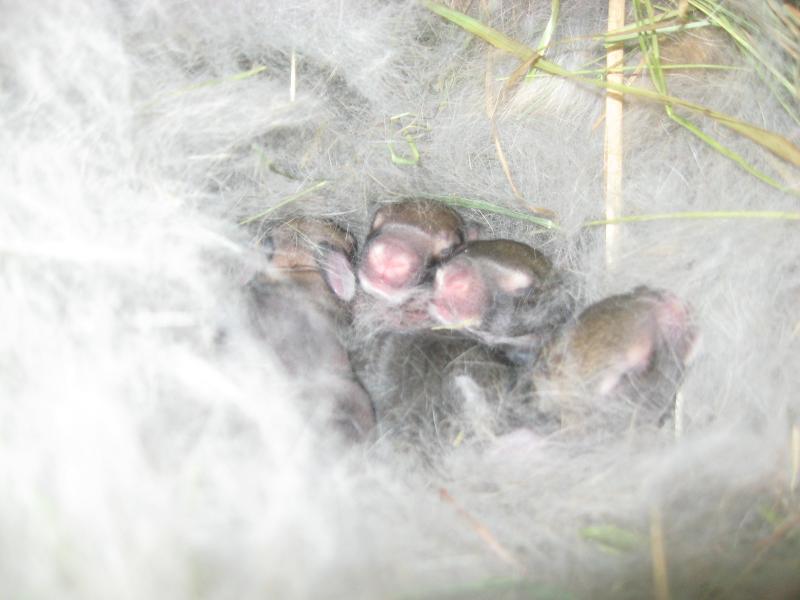
For breeding, take the doe to the buck's cage. If you take the buck to the doe, she will be upset and defending "her" cage from him! Watch to make sure the doe is bred and write it down. Note the due date and put a nestbox in 5-6 days before she is due. If you put it in too early, she will use it for a toilet. I always used a nest box with no top on it so on freezing nights, I could place an aluminum (auto type) drop light on top of the wire cage so the heat from the light bulb would help keep the babies warm. Once they have fur it is not needed. The does will pee on their babies to disguise the nest from predators. Yay. The babies can die from the ammonia or from being wet. I used wire bottom nest boxes so the pee could pass through.
Water. Back in the dark ages I used crockery bowls. Now you can use the water bottles that hang on the outside of the cage. Or you can run piping behind the cages (hung back to back) and use water nipples. Then if you need to leave for a couple of days, they will have water. Make sure the rabbits can't get to the piping through the wire or they will chew on it.
Feed. Hanging feeders that you can fill from the outside of the cage. Again, it is so nice to be in a barn where the feed won't get wet from rain and neither will you. You can feed pellets or a grain mixture. Hoodat has given some very good tips on feeding grains and greens.
I hope this helps.
You don't have to build a huge barn for rabbits. But you could combine your goats and rabbits with a divider between them. Tack the chickens on and you have all your livestock in one easy location! Plan it out so that it will suit your needs and then make it bigger.