2016 Little Easy Bean Network - Gardeners Keeping Heirloom Beans From Extinction

The Big Bean Show - Day #29


This bean is called "Cherry Trout". It started out as an outcross in my garden in 1983, and then I named it and grew it until it was stable. It was a bean that didn't take a long time to stabalize. It is productive and a bush plant that grows without runner.

Cherry Trout.jpg

"Cherry Trout"
 
The Big Bean Show - Day #30


This bean is called "Coach Dog". It was once part of the beans in John Withee's Wanigan collection. The pattern holds up very well in warmer than normal summers, maintaining it's usual ratio of white to red coloring with nice spotting. It looks similar to Jacob's Cattle but Jacob's Cattle beans turn nearly all red when grown here most summers.

coachdog2016.jpg

"Coach Dog"
 
I was curious about the name, and found some pages about carriage dogs/coach dogs, which apparently were trained to run alongside carriages to provide security against bandits. Wikipedia says: "The dogs were trained to attack the horses used by highwaymen, giving the owners' human security time to respond to the actual robbers. When the Dalmatian breed was introduced to England in the 18th century, they quickly became the carriage-dog breed of choice. Previously any breed with long legs and some weight in the body had been used." And then this led to the use of dalmatians as fire-engine escorts, helping to clear the streets for the engine. Your coach dog is red, so I guess it's a red- or liver-spotted dalmatian. :)
 
@Ridgerunner, Glad you are enjoying the bean show. I figured someone must be observing because the view numbers on the thread keep changing.

@sea-kangaroo. Interesting history about the real Coach Dogs. This bean was one of my first 35 beans I had acquired when I first joined John Withee's Wanigan Associates in 1978. So I feel a personal connection to the variety. I reacquired the bean from Seed Savers Exchange this year. It grows much better for me than Jacaob's Cattle. One might think it's JC but the growth performance is different enough to make me think there certainly must be some real genetic differences.
 
Hi @aftermidnight, Yeah I think bush beans do have an edge over pole beans when it comes to colorful seed coats. Howeever since I've gotten into some of the Facebook groups like Heirloom Bean Addicts Anonymous, Bohnen-Atlas, and a few others I'm finding more colorful pole varieties from European countries. However even in Europe the bush beans might have the edge. I suppose that might be over time people got into growing bush varieties more since they didn't have to set up supports to grow them.
 
That is in fact the most likely answer. In fact, I rather suspect that the only reason we still have pole beans TO BEGIN with (i.e. why that trait was not rouged out at some point in the beans' domestication) is that the Native people who first did so had a ready made climbing substrate already in place in the form of the cornstalks they were using in their three sisters growing plan. Had they not had corn (or had corn remained the fairly short and thinnish plant it was when it was teosinte) it is likely that ALL (or nearly all) beans would be bush. This seems to be a sort of pattern with legumes. In general, when the choice comes down to a bush or a pole type, bush wins. The only legume crops where pole tends to keep it's edge (the wild forms of most of our domesticated legumes start out as vines, so that is the evolutionary norm) is either where they is not much bush DNA available such as with the common/ English pea, or the Lablab (until I got some in a trade I did not know there WAS such a thing as a bush lablab) or where the crop is treated as a mass commodity which is harvested from the field all in one go, such as many cowpeas and most of the "minor" beans (azuki, mung, mothe, urd, rice etc.*) so it doesn't really matter if they make one huge snarl.

In some cases the choice is so overwhelming that one forgets a pole version even exists. I was unaware of such things as climbing soybeans until the day I had some grow (from some black ones I had bought in Chinatown and thrown out) even though I knew wild soy was a vine. And I'm not sure if I have EVER seen a climbing Fava though (since favas are technically a vetch) there presumably MUST have been one at some point.

* Though my grow out seem to have demonstrated that bush forms of these DO exist.

 
Hi @aftermidnight, Yeah I think bush beans do have an edge over pole beans when it comes to colorful seed coats. Howeever since I've gotten into some of the Facebook groups like Heirloom Bean Addicts Anonymous, Bohnen-Atlas, and a few others I'm finding more colorful pole varieties from European countries. However even in Europe the bush beans might have the edge. I suppose that might be over time people got into growing bush varieties more since they didn't have to set up supports to grow them.
@Bluejay77 Bean Addicts Anonymous, I guess it's a good thing I'm not on Face Book I'd never get off the computer:).

@Ridgerunner I grew a bush lablab last year 'India Bush' they were quite tasty is this the variety you have?
DSCN5848.JPG DSCN6159.JPG
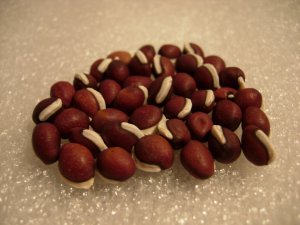
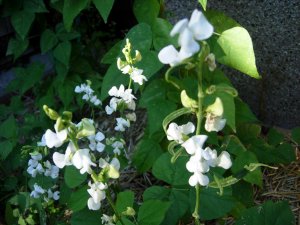
India Bush
 
Dunno the name of what I have, but going visually, they seem to be the same one you have (I remember being surprised that a colored seeded lablab could have pure white flowers). I'm assunming that you were eating them only as green pods, as a colored seed, I always assumed the ripe seed would have too many toxins to be safe to consume without leaching.
 
Back
Top