2020 beans continued.
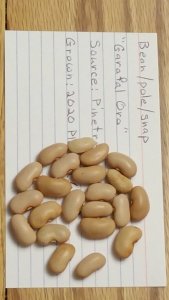
Garafal Oro - pole Romano-type snap, from Pinetree Garden Seeds in 1999. The pods are a curved scimitar shape, green, 5-6" long, with a sweet flavor that is almost like a cross of bean & pea. Later than some Romano types, but very high yielding. After many successful plantings, I had trouble with it this year. Vigorous vines & a heavy pod set, but 80-90% of the seed turned out to be deformed, and had to be discarded... only 6 ounces of good seed. I had added some "garden mix" topsoil to that area last year (from a local landscape supply) which they stated had sand & compost mixed in. Which sounded good - but I suspect it was
municipal compost, with herbicide residue.

Other plants in that same area were also stunted (including weeds), I hope whatever caused this breaks down - because I added 5 yards of that same soil (but a year later) to the low side of my garden, and to my garlic bed.
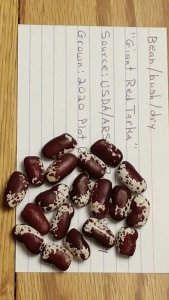
Giant Red Tarka - bush shelly, selected from a Hungarian accession sent to me by the USDA/ARS. Very vigorous, heavily-branched bushes, numerous 4-5" pods turn yellowish tan when ripe, with 4-5 very large red & white seeds that are very easy to shell. 85 days to dry; had 13 ounces of dry seed, and a meal of shellies. My favorite bush shelly.
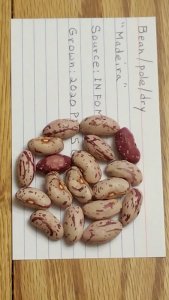
Madeira - pole dry, from an SSE member in Indiana. Strong climber, but not heavily branched. This is a horticultural type, with very fibrous immature pods. The mature pods are 5-6" long, and contain 4-6 VERY large beans. Their flavor is IMO too strong for use as shellies (although we ate some that way); but it is a very good soup bean. Fairly long DTM, 115 days to dry seed here. Because weed pressure delayed maturity (a common theme this year in the rural garden) we only harvested 5 ounces of dry seed.
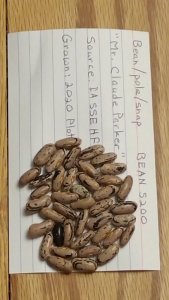
Mr Claude Parker - pole snap, from SSE's Heritage Farm collection. This was a new trial, and was planted VERY late to replace something which failed to germinate. The round pods are 4-5" long immature, green with very heavy purple striping, and very early. I became interested in this variety during a Labor Day visit to Heritage Farm, because all of the seed on their plants was completely dry by then, and seed production was high. My own plants were stunted, but bloomed after about 30 days, and ripened 4 ounces of seed. It looks like a "keeper", I plan to grow it again under more favorable conditions.
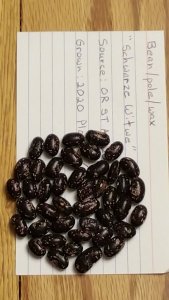
Schwarze Witwe - pole wax, from an SSE member in Oregon. An Austrian bean, the name supposedly refers to the seed pattern being "similar to the veil of old widows". 5-6" stringless, slightly curved yellow pods. Not usually my most productive pole wax, but did very well this year... in fact, the only bean in the rural garden to perform normally. We were too busy with Emerite snap beans to eat many of these, so most were let go to dry. The pods took a long time to go from snap to dry & many had to be picked as shellies just before frost... but we harvested 26 ounces of dry seed.
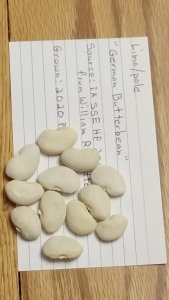
German Butterbean lima - pole, from Heritage Farm. 10-12' vines, with wide 4-5" pods, 3-4 very large white beans per pod. The large shellies are tender skinned & sweet. Started as transplants, all seed matured... 2 pounds of dry seed. While I love the flavor, I was a little disappointed in the yield, and will make it a point to grow it on the more fertile rural plot next time.




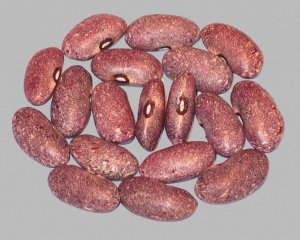
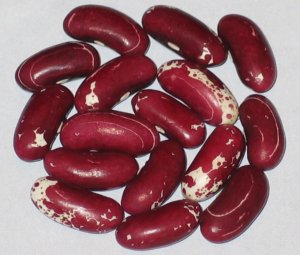
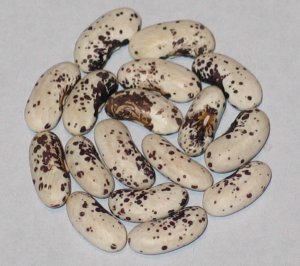
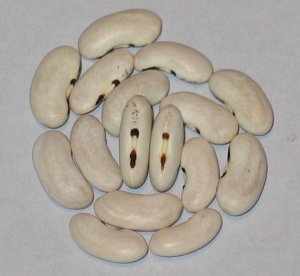
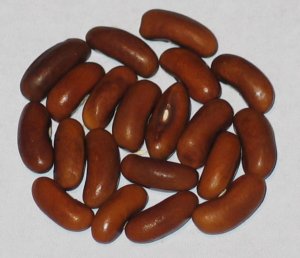
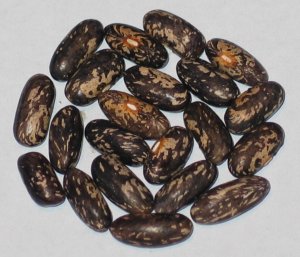

 No, it's not wax bean. This is bush bean for dry seeds. They are big and bulgy. Exactly like bumblebees


