2021 soybeans, continued:
View attachment 46064 View attachment 46065 View attachment 46066
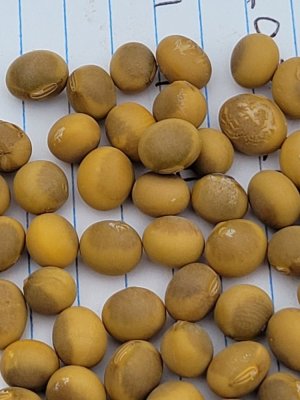
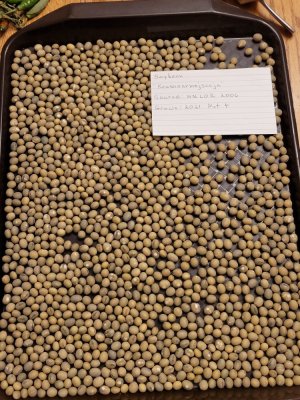
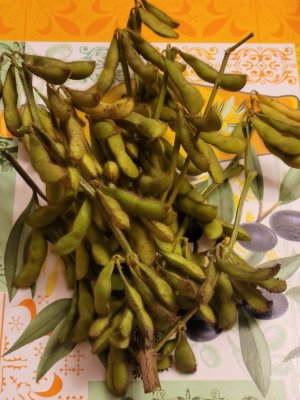
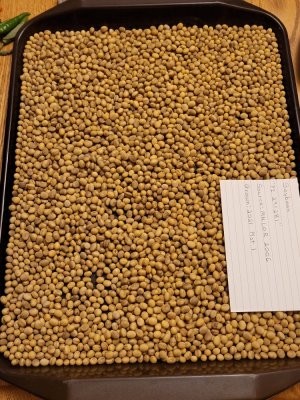
Krasnoarmejscaja, from the estate of the late Robert Lobitz in 2006, originally collected by the USDA in Russia. Main season, Maturity Group I. Short, very stout 12-16" plants, with long branches which bear over 50% of the pods. This is a large-seeded "gray" that I am investigating for use as soy nuts... its dry weight protein content can be over 47%. 2012 seed had zero germination in 2020, so it was started as transplants this year. Those transplants were so successful that I felt comfortable cutting one plant (above) for edamame, and harvested 16 ounces of seed.
View attachment 46067 View attachment 46068 View attachment 46069
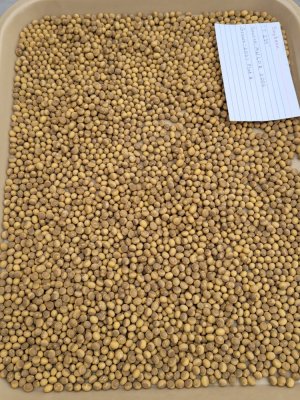
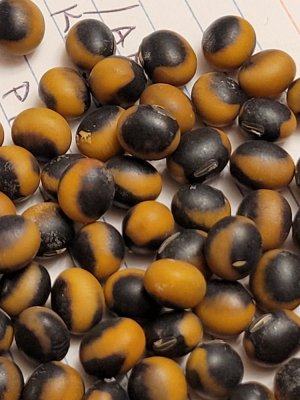
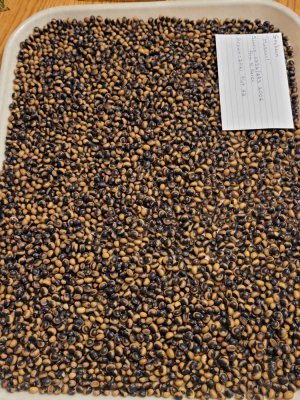
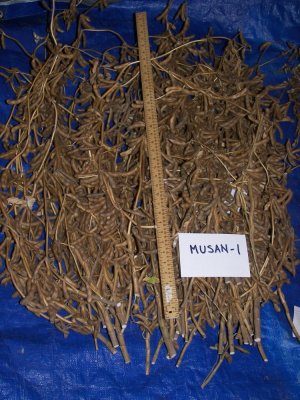
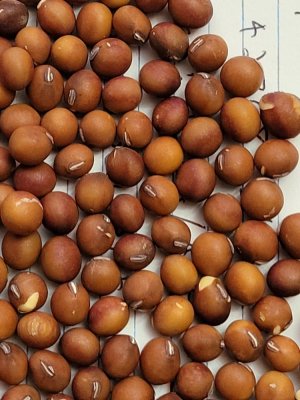
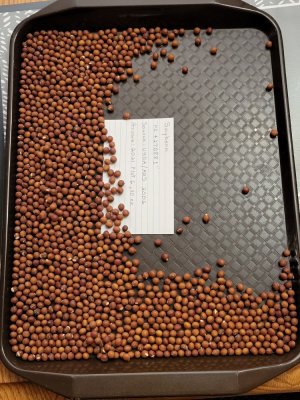
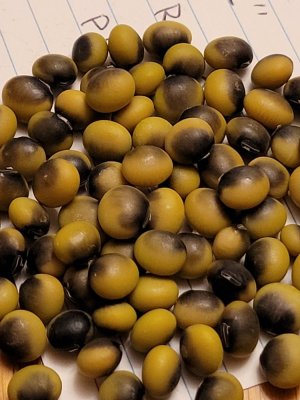
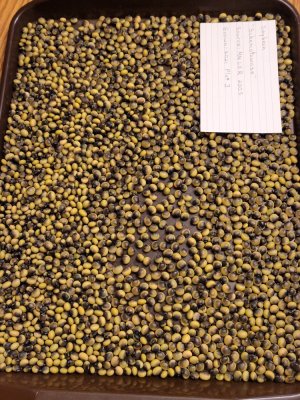
Musan-1, from the USDA/ARS 2006, originally from North Korea. Main season, Maturity Group I. Very tall 36-40" plants that required some support. 2012 seed failed in 2020, so it was started as 'rescue' transplants this year, and did very well. The USDA considers it to be only moderately productive; but in garden culture, it produced 2 pounds of seed from a 10' row. That is especially significant given its extraordinarily high protein content - 53% dry weight. The eye-catching seed coloration very closely resembles An,dunscaja, so the two were grown in different sites.
View attachment 46071 View attachment 46072 View attachment 46073
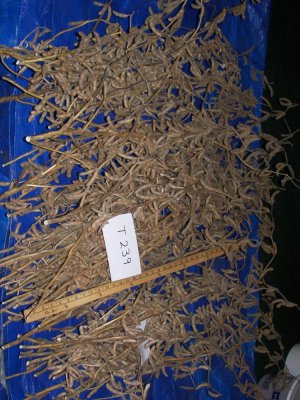
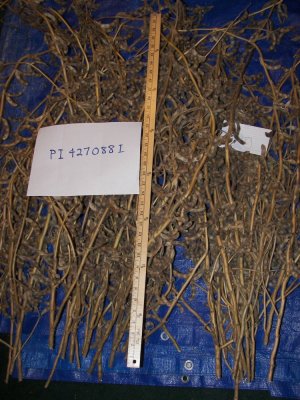
PI 427088 I, from the USDA/ARS 2006, originally from Jilin Sheng, China. Nearly spherical reddish-brown seeds. Tall, heavily-branched 33-36" plants benefit from support. This is a late variety that always pushes up against the frost, but has a very heavy yield. Nearly all pods are 3- or 4-seeded, and borne well off the ground. Another 2012 "rescue", started in pots due to failure in 2020. I was surprised that this was delicious harvested green as edamame, with fat seeds & the large number of seeds per pod offsetting the small seed size (150/ounce). I nearly dropped this variety from my collection (!!!) but it is outstanding as a late-season edamame, and I will be keeping it in rotation for that purpose. The biggest drawback of this variety (aside from the long DTM) is its vulnerability to moisture during ripening, and the high number of defective seed coats. I've had to cull the seeds heavily every time it was grown, but still ended up with 10 ounces of seed from an 8' row.
All three of these were successful rescues of 2012 seed that appeared to be dead when direct seeded, and proved the value of soybean transplants. I will be repeating the process for the varieties which failed this year, and as backups for any seed which tests as low germination.




 the Mrociumere out-cross package arrived and was picked up from the PO Box today. best Christmas present i've had.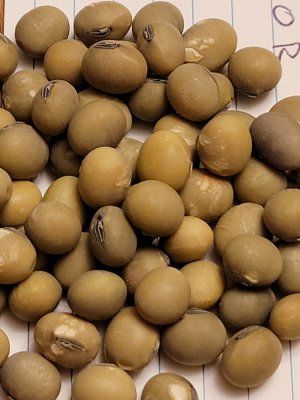


 A situation I intend to address this winter, when I will be buying equipment to start testing some of my soybeans as tofu, and as roasted & ground soy grits. The latter were used as part of a multi-grain hot cereal that we make & added to bread recipes, until the local health food center stopped carrying it.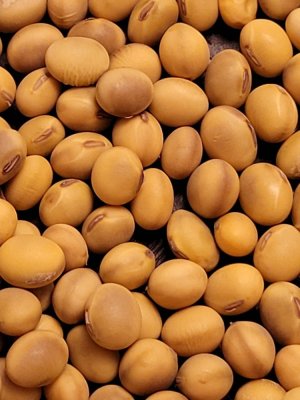
 Fortunately most of the plants recovered, and produced 14 ounces of seed.