For the most part, I use a soap & a 50% rubbing alcohol/water mix in a horse sprayer bottle. For the soap, I've used insecticidal soap, mild dish soap, or baby shampoo. The solution kills almost anything it is sprayed on; the alcohol paralyses them long enough for the soap to work. It will spray wasps out of mid-air, and I've used it on caterpillars and squash bugs (it quickly kills adults if they are completely wet, and kills the eggs as well). I sometimes use it on aphids, but I have a very good population of beneficial insects, so I only spray the aphids if they are getting out of control... which usually means ants are spreading them, in which case I prefer to put out ant bait to control the ants, and let the predators take care of the aphids.
The same mixture will kill CPB larvae; but since I don't grow potatoes, those are seldom a problem. The few years they showed up, the litchi tomato that I grow every year proved to be a good trap crop; the larvae were easy to see & spray in the lacy foliage. The spray would kill the adults too, but it sometimes took two applications.
Striped cucumber beetles are probably the hardest pest for me to kill, they will often recover from the standard spray. Adding a little cooking oil to the mix has made it more effective, but some still survive. With soap & oil, it becomes the organic formula recommended by the USDA (although theirs did not use alcohol).
Most often, I use the spray for spot application. While it doesn't kill all cucumber beetles outright, spraying the vine tips seems to make them unpalatable to the beetles. If wider application is needed (like an outbreak of squash bugs) I spray all surfaces, wait an hour after spraying, then hose down the plants to prevent leaf burn. All of the bugs that were sprayed will be dead by that time.
Slugs can sometimes get bad late in the season, especially if it has been a wet summer. This usually happens just about the time tomatoes start ripening; if damage becomes severe, I will put out iron baits.
I use BT to control corn earworm, sprayed directly into the silks when they first appear, using a pressurized sprayer. Used that way, it is very effective against the earworms; but unfortunately, it has little impact on corn borers.





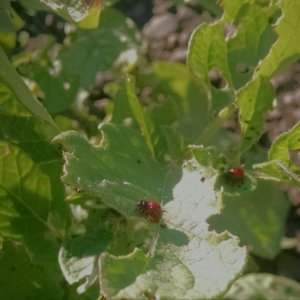
 ) but I found one on a sunflower this morning
  !
!
 of my plants. We'd had so much rain I didn't even think that I would need to keep an eye on watering this past couple weeks but I was wrong
 hopefully I won't need to buy any neem oil when I go shopping Sunday.


