I'm not sure that the seeds being exchanged between the members of the CHDTP is casual; the other main leader of that project lives in Australia, hence many of the Australian references in the dwarf varietal names, and Australia has uniquely strict import & quarantine rules for all manner of things. As someone who will be sending bean seeds into the US in the fall, and having done some research into that process, I can see that pepper and tomato seeds are subject to different and more stringent rules for even US entry - if they are allowed in at all. The project is quite a public one, as well as the associated OSSI (Open Source Seed Initiative) pledge those seeds belong to. I can't imagine that they would have been able to continue for so many years if they were violating international conditions for seed exchange, especially in such a public setting.
In addition to that though, I've read estimates that in my country something like 98% of seeds on racks, which backyard gardeners purchase in commercial circulation, are being brought from India, as well as other countries and continents. Virtually none of the seeds planted in ground here, in home gardens, are from this country, or even this continent. That's a staggeringly high percentage of cross-hemisphere seed import. Nobody seems especially concerned at present with this situation, though the virus is also present in India.
But there is also another issue with ToBRFV. How did this problem come about? It didn't originate in backyard gardens; it originated in large scale commercial tomato greenhouse operations, and the emergence & spread is in fact linked to intensive production practices. I can see why there is concern about it, because it does appear highly infectious, impossible to eradicate, and globally spreading. One can't help but notice though that many of the affected countries are world leading tomato exporters. ToBRFV has a high mechanical infectivity, and worker's hands, tools, clothing, trays. etc. are all transmitters. Crop production systems and commercial greenhouse outbreaks seems to be the sole ToBRFV manifest setting, not the home garden. It also poses the not insignificant question, if a person buys a commercially produced greenhouse tomato, plucks out a couple seeds and plants them, as many do, could they become transmitters as well, infecting garden soil (a longevity which appears in the decades) in their area, since seeds are a major suspect in global transmissions? Or even more inconspicuously, handle tomatoes in my kitchen, then go and work in the garden. The Australian government has stated that workers should not be bringing store bought tomatoes into tomato production sites, or pepper farms & production sites for fear of ToBRFV contamination. I think if there is a concern for tainted seeds, it would be the tomatoes (their seeds) originating in commercial/greenhouse operations, the sites of origin for this virus. Unfortunately, there has been no effort to educate the public about the dangers of seeds from these tomatoes if planted in your soil.
The saddest facet of this is, store bought tomatoes, generally, are pretty awful. While I appreciate being able to eat a tomato in deep January, tomatoes are the number one home grown vegetable in North America for good reason. A store bought tomato tastes significantly inferior to a homegrown one, and is much less nutritionally dense. On the positive side, because there is no chemical solution, maybe this new virus will result in an incentive to re-examine the way crops like tomatoes have come to be grown in such a mono-cropped, commercial, 'quantity over quality' approach. The incredible scale and methodology of single crop, chemically dependant production is surely problematic on a number of levels, both plant and human. This is part of why (IMHO) the CHDTP is such a great project. People working cooperatively to create varieties of manageable tomato plants that can be grown by anyone, even apartment dwellers, folks with small yards, or seniors with only a balcony, but who want a tomato that tastes like they did in the' old days'. I'm not sure it would be correct to limit this kind of grass roots project, when it bears no culpability in having created or spread ToBRFV.




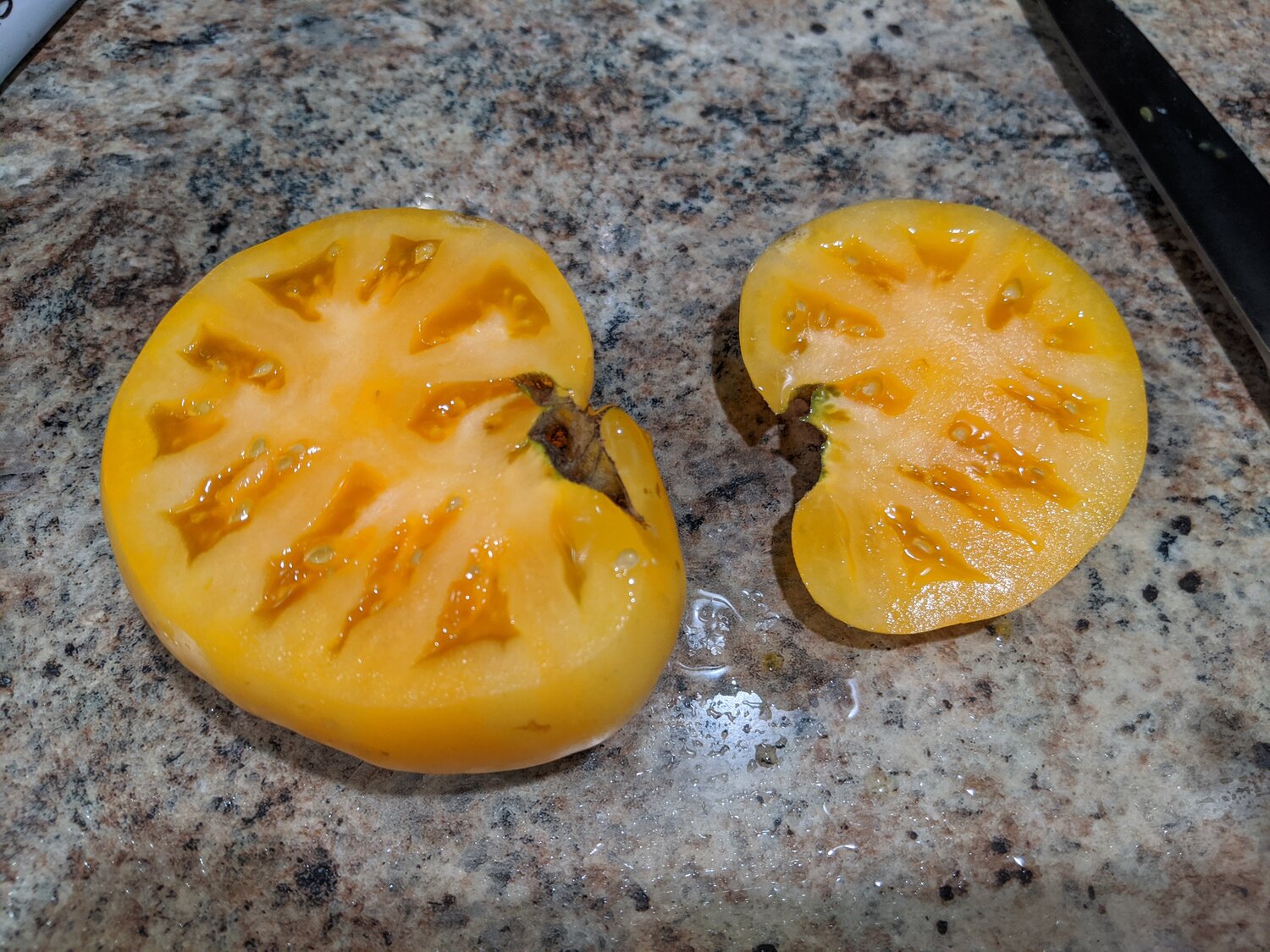

 .
. Reading between the lines i got a good idea of what was going on and went looking for a clean source. On Amazon i found usp grade stuff and bought some.


