Benefits of bottomless planters please?
For the bottomless planters, I think they are theoretically close to tiny raised beds. A regular pot has limited capacity for the soil and space for the root to develop; however, when you remove the bottoms, the plants can reach for more nutrients and water when they are too big for the original pots.
I learned this concept from
Bunny Guinness - she used this method for trees in the garden. I have already prepared a few bigger pots for doing the same. It's pretty common to see people use containers to plant vegetables. For example, instead of growing potatoes in the ground or raised beds, planting them in all kinds of containers has advantages like flexibility and convenience. No-dig is already a method that can save a lot of effort and benefit soil health. However, it still takes time to collect cartons and prepare compost (a lot of compost).
Another concern is that it's difficult for me to use raised beds or no dig method for some good spots (with the longest sunshine hours) in my garden (due to the slope or too close to one of the gates). Container planting is the best alternative, as long as the capacity limitation can be improved. Removing the bottom is helpful.
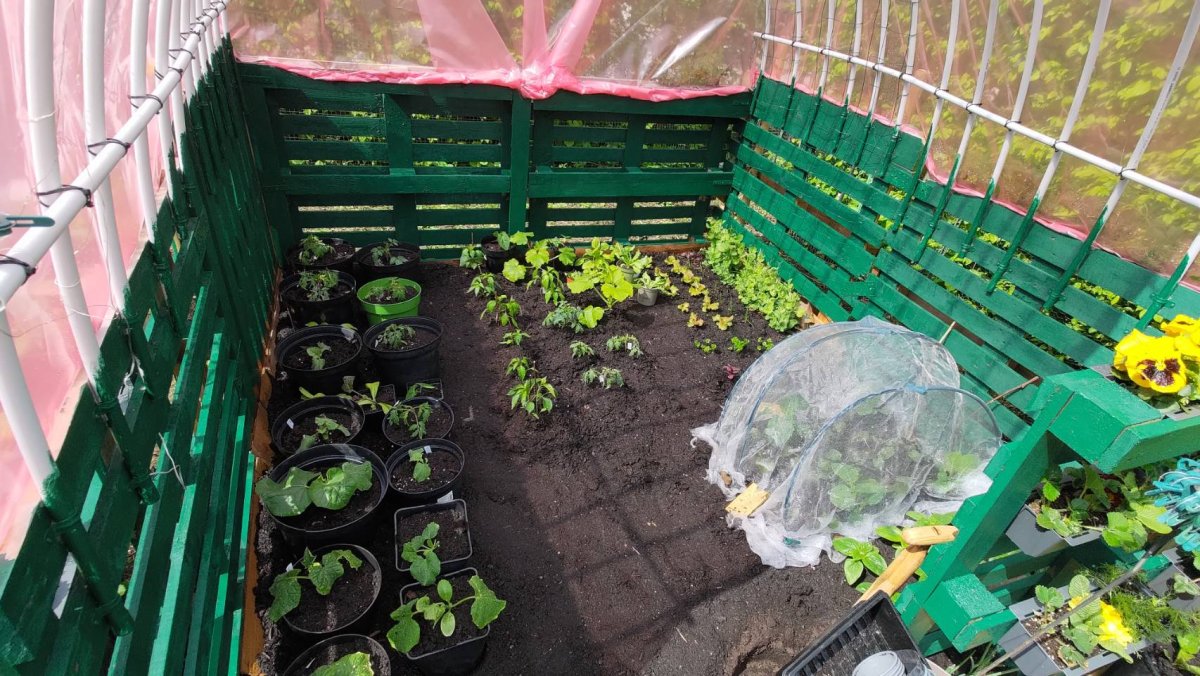
Besides, most plants leave my greenhouse for their next journey when they are relatively small. A 10 Liter pot is quite sufficient for them to grow for another while, in an exclusive space, without any competition. When they develop further, and their roots need more space and nutrients, they won't be constrained by the bottom.
I found one photo in my mobile.

In this pot, I put one basil, one tomato, and one salad green seedlings together when I potted the other seedlings on. Somehow I lost track of their varieties so they became neighbors.

They are still quite small, but the roots are already stretching out for adventures. I moved the bottom and put this small pot on the ground in between the bigger pots. I am not sure if my description is proper or not, but it's like going on an adventure with a base camp nearby.
This year, I will use this method for some vegetables, trees, and, most importantly, Dahlias. It took me too much effort to dig and collect Dahlia tubers from the raised beds last year, and whatever stayed in the raised bed didn't survive after winter. If they grow in the bottomless planters, after the green parts die back, I can remove the pots somewhere else with frost protection (like the garage) and do the following care (basic cleaning, dividing, etc.) when I have time. As the tubers are what I need to keep, any roots that reach the soil underneath can be removed.
In short, the pros I want to prove from this method include:
1. flexibility
2. less labor
3. free access to the soil underneath
4. less competition (in the early stage)
Of course, there will be cons like:
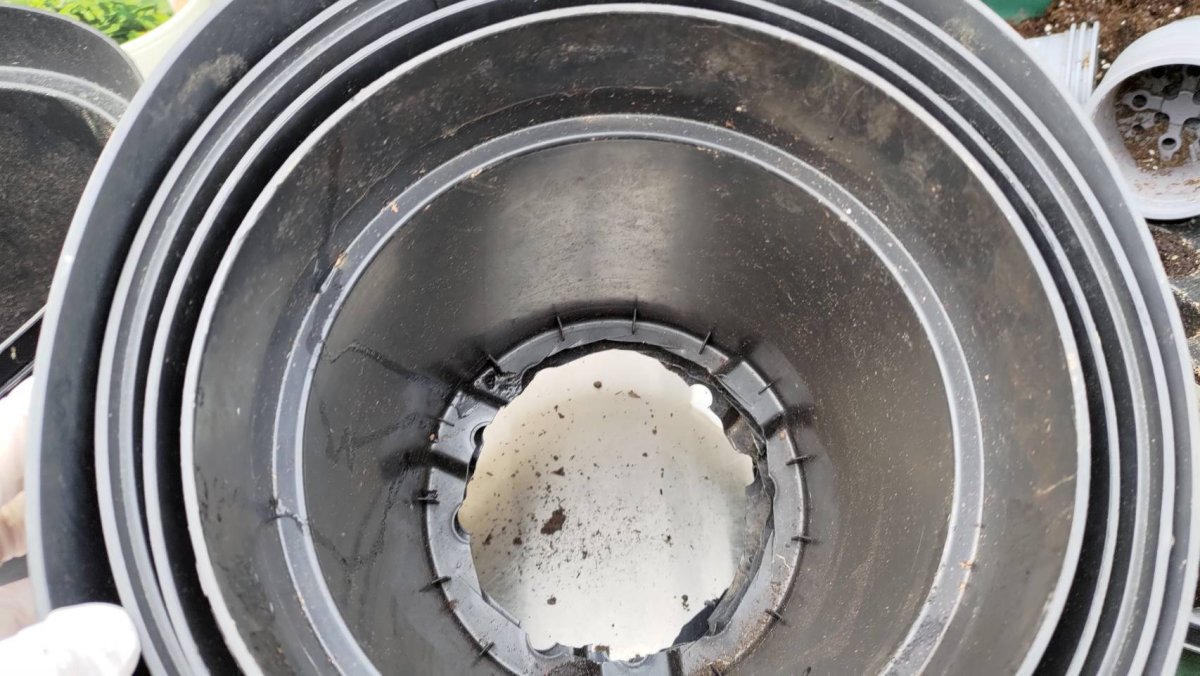
1. efforts to remove the bottom -- a good scissor can cut ordinary thin-wall soft nursery pots, but thicker pots need an electrical sow.
2. less competition (with weeds) also means more isolated conditions with much less active soil microbes





 Looks like it will be a pleasant barber shop for the Summer
  .
.


