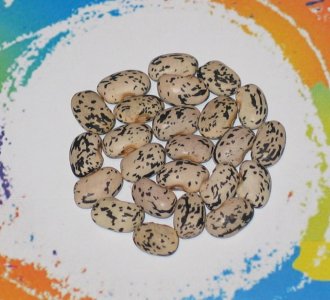
One of my original named beans from the late 1970's. I consider it a pole bean but it's not a high climber. It always appeared to me that the markings were set farther apart than most streaked and speckled beans.
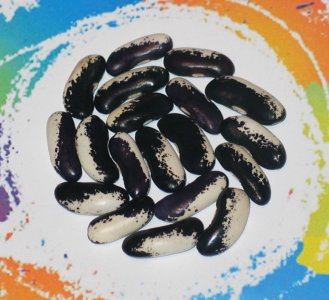
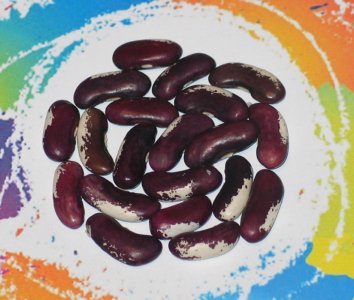
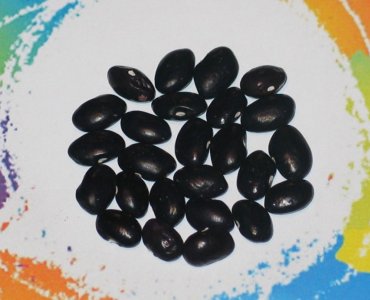
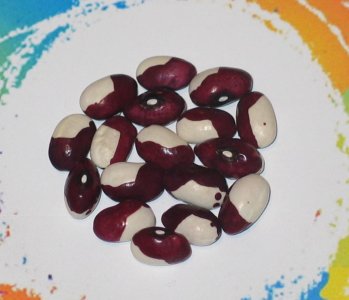
In 2012 I had requested seed from a fellow in Maine who runs a gardening program in one of Maine's school systems. The first photo was the original seeds that were mixed into a bean variety that I had requested. I emailed a photo to him and asked what they were. His reply was they were Magpie. I knew that wasn't correct. So I grew them out and named the bean Black Gem. This year was the fourth time I've grown the bean. The seeds have grown longer and more slender than the originals similar to Edogava Zurunaki Namame. Once it put out a brown bean with the same pattern and the second photo is the reddish colored one that it produced this year. Plants are larger than most of the bush beans I've grown.
Black Gem - Bush Dry - 2022................................Red Gem - Bush Dry 2022
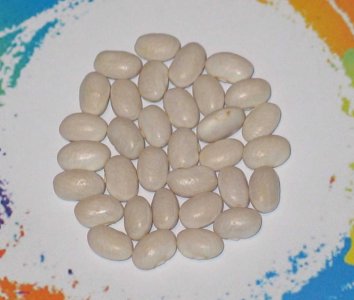
This is the original seed from Maine that became Black Gem.
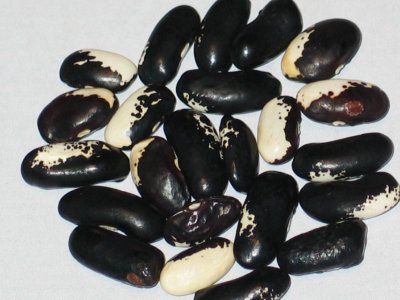
Said to also be an excellent snap bean. AKA the Treaty bean. Also spelled Shackamaxon which was the name of a former Lenape town in what is now the Kensington neighborhood of Philadelphia. The alternate name ”Treaty Bean” comes from Shackamaxon reportedly being the site of a 1682 treaty signing between the Lenape and William Penn. Attractive plant with rose-pink flowers, pods turning purple when ripe. Glossy blue-black to black seeds. Originally, a Native American bean from the Lenape tribe in Delaware and preserved by Quaker farmers.
My first encounter with this bean was in the late 1970's when I requested the bean from John Withee's Wanigan Associates. It's been listed in the Seed Savers Exchange yearbook off and on since the early 1980's. John Withee's source was a grower in Bowdoin, Maine. Everytime it's listed in the SSE yearbook the lister always seems to be from Maine. Likely and old state of Maine heirloom.
@Artorius go ahead and post your bean photos. We can post photos at the same time. I will be doing this for another 34 days. I wouldn't want to see you have to hold off that long. I would really love to see all your bean photos. I've seen all mine LOL.
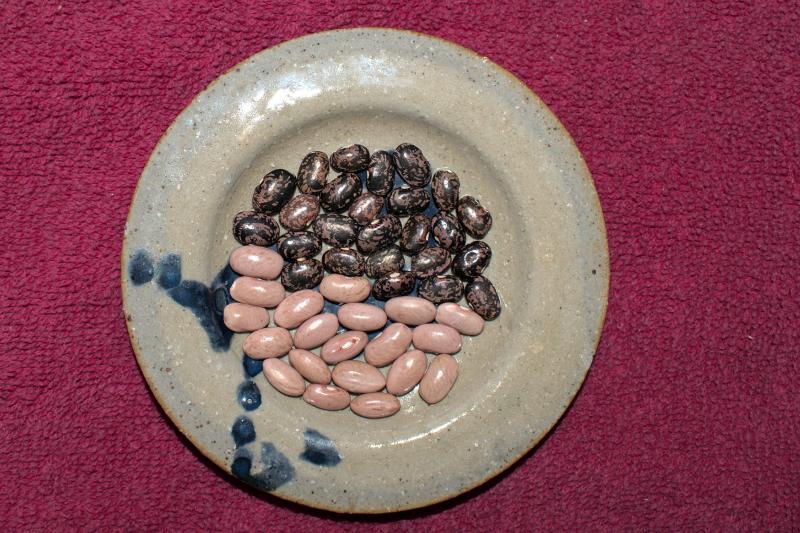
here are two of the odd beans, the gray ones (i posted before) aged to look more like watermelon seeds and the pink ones (that came from solid olive colored beans) are aging to look like other pink beans i've had in the past where they tend to turn more of a tan color. i was hoping they'd stay pink.
My first encounter with this bean was in the late 1970's when I requested the bean from John Withee's Wanigan Associates. It's been listed in the Seed Savers Exchange yearbook off and on since the early 1980's. John Withee's source was a grower in Bowdoin, Maine. Everytime it's listed in the SSE yearbook the lister always seems to be from Maine. Likely and old state of Maine heirloom.
I'm going from memory but I believe this is mentioned .. somewhere .. as an Abenaki (or general Wabanaki maybe) variety, so it may pre-date Maine! It might be in Fred Wiseman's book.
I'm going from memory but I believe this is mentioned .. somewhere .. as an Abenaki (or general Wabanaki maybe) variety, so it may pre-date Maine! It might be in Fred Wiseman's book.
Grew these last year in my backyard plot and I was not impressed. Regrew the bean in a different plot and soil and it produced really well. This bean is one of the many Robert Lobitz beans that I have collected that he introduced through the Seed Savers Excahnge yearbook about 20 years ago. The bean size is very small. Total seed produced from 10 or 11 plants 17.45 ounces (494.69 gm)